




Meet the Fellows: Dr. Sara Hojabri on turning personal experience into better endometriosis care
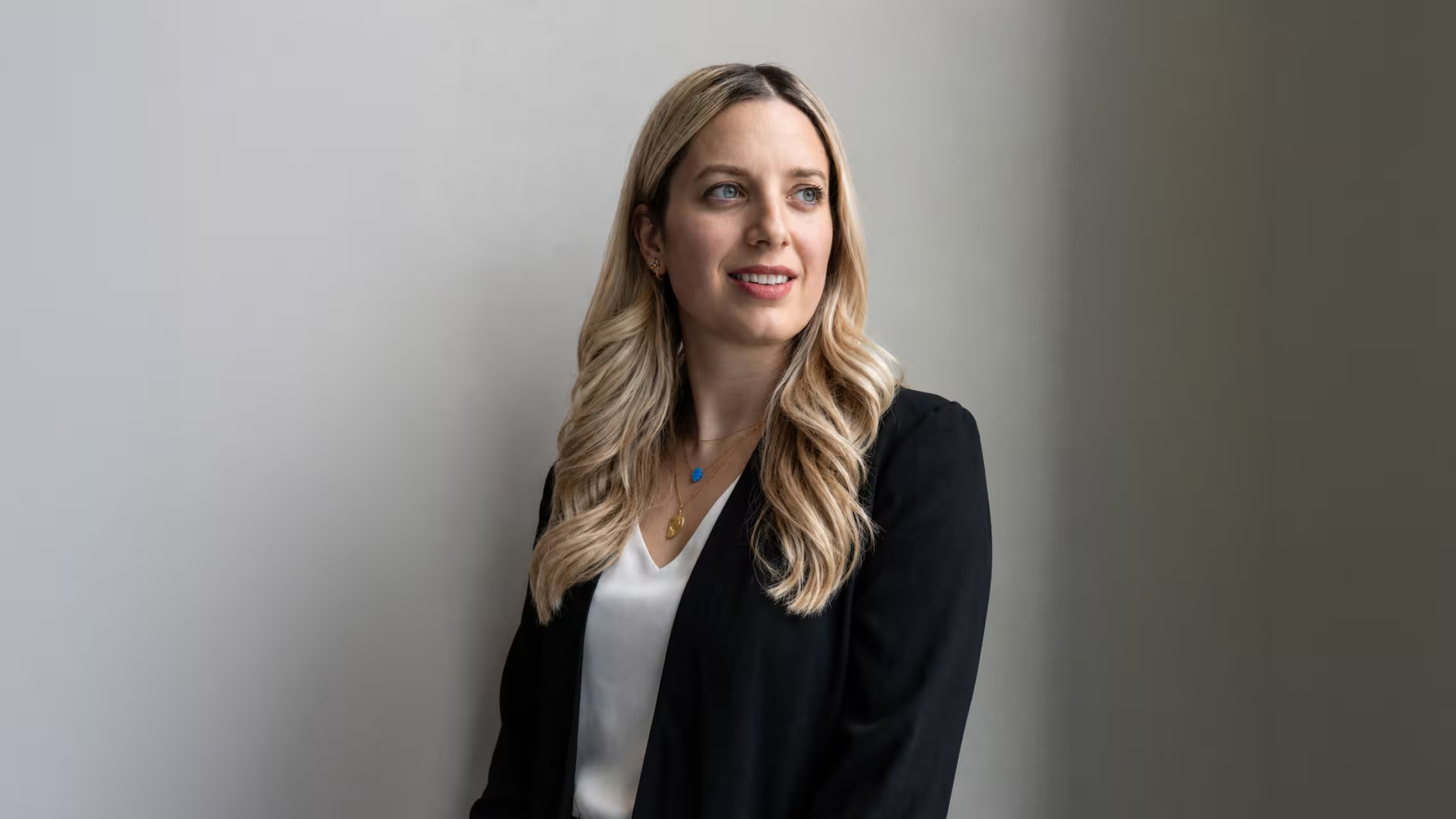
For people living with endometriosis, getting answers can take years, and accessing specialized treatment can take even longer. Dr. Sara Hojabri is helping to change that.
In this edition of Meet the Fellows, we introduce you to Dr. Hojabri, the Friedrichsen Cooper Family Endometriosis and Pelvic Health Fellow. Dr. Hojabri is completing her fellowship in Minimally Invasive Gynaecologic Surgery at Sinai Health focused on developing advanced expertise in complex endometriosis care, including minimally invasive and robotic surgery.
Her connection to this work is deeply personal: after experiencing endometriosis herself and receiving life-changing care at Mount Sinai, she chose to pursue specialized training so she could provide that same level of care to others.
Dr. Hojabri shares what drew her to the field, why endometriosis can be so difficult to diagnose and treat and how fellowship training is helping to build the next generation of specialists.
Q. What first drew you to obstetrics and gynaecology, and what inspired you to specialize in minimally invasive gynaecologic surgery and endometriosis care?
Dr. Sara Hojabri: In medical school, I became drawn to obstetrics and gynaecology because I loved the patient population and the opportunity to care for women throughout their lives. I also loved surgery, but I’m very much a people person. In many surgical specialties, you don’t necessarily have the opportunity to build long-term relationships with your patients. Obstetrics and gynaecology give you both.
When I came to Toronto for residency, I was exposed for the first time to highly specialized endometriosis care and minimally invasive and robotic surgery. I found it technically fascinating and surgically challenging.
At around the same time, I went through my own experience with endometriosis. I developed a very large endometrioma and needed urgent surgery. I received incredible care from the minimally invasive surgery and endometriosis team here, and the treatment made an enormous difference in my quality of life. Experiencing firsthand what this kind of specialized care could do for a patient really solidified my decision to pursue endometriosis-specific training.
Q. What brought you to Sinai Health for your fellowship, and what makes the program distinctive?
Dr. Sara Hojabri: Sinai Health is unique because of the level of subspecialized expertise concentrated here. I’m learning how to manage very complex endometriosis and perform surgeries that relatively few surgeons are trained to do. Being able to learn those techniques from world leaders like Dr. Nucelio Lemos, the Friedrichsen Cooper Chair in Endometriosis and Chronic Pelvic Pain, as well as the other surgeons on the team is an incredible opportunity.
But one of the biggest things I’ve learned is that excellent endometriosis care isn’t just about surgical technique. The team is always asking how we can improve care – whether through multidisciplinary rounds, specialized pain care, research, new approaches to fertility preservation or collaboration with other specialties. That broader approach is something I hope to carry with me throughout my career.
Q. For someone unfamiliar with the field, what is endometriosis, and why can it be so difficult to diagnose and treat?
Dr. Sara Hojabri: Endometriosis is the presence of tissue similar to the lining of the uterus, but growing outside of it. Endo most commonly occurs within the pelvis, but it can involve other areas and organs as well.
The symptoms can be incredibly varied: painful periods, pain with intercourse, bowel movements or urination, heavy periods, chronic pelvic pain, among others. Those symptoms can also overlap with other conditions, which is one reason diagnosis can be difficult. We also don't have a simple blood test or biomarker that tells us someone has endometriosis. Specialized imaging, such as endometriosis mapping ultrasounds or MRIs, can be very helpful, but access to that expertise is not equal everywhere.
Education is another issue. When I was in medical school, endometriosis received perhaps one slide in one lecture. Women's health has historically been under-researched and underfunded, and that affects how quickly symptoms are recognized.
One thing I really want people to understand is that debilitating period pain is not something patients should simply be expected to live with. If pain is significantly affecting someone's life, we should be asking why.
Q. What does excellent endometriosis care look like?
Dr. Sara Hojabri: It starts with early recognition and timely diagnosis. Even when a young patient does not yet have obvious findings on imaging, recognizing that their symptoms are not normal can change the trajectory of their care.
Another important piece is shared decision-making. We need to give patients information and involve them in decisions about medications, surgery, fertility preservation or other treatment options. Even if someone does not want treatment at that moment, they deserve to understand their choices.
The third piece is multidisciplinary care. Endometriosis is a gynaecologic condition, but its effects can extend well beyond the reproductive system. By the time someone has experienced chronic pain for years, they may also have pelvic floor dysfunction, fertility concerns, mental health effects or involvement of other organs.
At Sinai, we work with radiologists, fertility specialists, pain specialists, pelvic-floor physiotherapists, urologists, general surgeons and others. Sometimes removing the endometriosis surgically is only one part of the treatment required.
Q. What are some of the most important skills or approaches you are developing during your fellowship?
Dr. Sara Hojabri: One of my major goals is to become comfortable performing the most challenging endometriosis surgeries, including the comprehensive management of complex disease—particularly deep infiltrating and extra-gynaecologic disease involving organs such as the bowel, bladder, ureters and pelvic nerves—so that patients with advanced disease can receive truly comprehensive care. But I've also learned that knowing when patients need more than an operation is just as important. The fellowship is teaching me how to assess the whole patient, interpret specialized imaging, understand fertility considerations, and determine which treatment approach makes sense for that particular person.
I'm also learning how important collaboration is. We discuss difficult cases together, and surgeons ask one another for opinions or assistance. These are complex surgeries, and having a team around you makes the care better.
There have also been enormous advances in areas such as imaging, medical therapies and fertility preservation. We're continually learning more about when fertility treatment should happen in relation to surgery and how best to preserve patients' options. It's a rapidly evolving field, which makes it an exciting time to be training in it.
Q. What has surprised you most about caring for people with endometriosis?
Dr. Sara Hojabri: I'm constantly struck by how resilient patients are. Endometriosis can affect every aspect of someone's life: their ability to pursue and complete education and to work, their relationships and sexual health, fertility, mental health and ability to be physically active. And because many of those effects are invisible, people can struggle silently for years.
I have also been struck by how much patients have had to advocate for themselves. Many of the patients who eventually reach specialized care have researched their symptoms, asked for referrals, and continued searching for answers themselves. It shouldn't have to be that difficult to be heard and believed.
Q. Can you describe a moment during your fellowship that reinforced why this work matters to you?
Dr. Sara Hojabri: There is not only one moment. Unfortunately, we see versions of the same story again and again. Patients come to Sinai Health from across the country after seeing many different doctors and sometimes waiting years for specialized care. What stays with me is how grateful people can be simply to have someone listen to them, believe them, and give them a diagnosis – even before we've discussed treatment.
I remember speaking with one patient who had travelled a significant distance because she had finally found an endometriosis specialist she trusted and was determined to stay with that physician. I understood that feeling personally. After receiving my own care here, I felt the same way: I had finally found people who understood this disease and had the tools to treat it.
Those relationships are a reminder of how meaningful it can be for patients simply to know someone is willing to take their symptoms seriously and work with them to find a path forward.
Q. What do you hope to carry into the next stage of your career?
Dr. Sara Hojabri: My goal is to have a surgical practice focused primarily on endometriosis, particularly the more difficult and advanced cases. By the time I finish the fellowship, I hope to be equipped to perform complex endometriosis and robotic surgery and bring those skills to another team in Ontario.
But I do not want to simply take the surgical techniques with me. I want to take the whole model. The biggest lesson from Sinai has been the importance of collaboration: multidisciplinary rounds, working with other specialists and continually asking how we can improve care. Ideally, I'd like to join or help build a team where several people are caring for endometriosis patients together.
I also want to continue doing research and sharing what we're learning through conferences and education. Endometriosis is an evolving field, and exchanging ideas with people elsewhere is how we continue moving care forward.
Q. Specialized fellowships depend on philanthropic support. What has this funded opportunity meant to you?
Dr. Sara Hojabri: It has had a huge impact. I think of fellowship training like an apprenticeship. These very specialized skills are passed directly from mentors to trainees, and that requires an enormous investment from the physicians teaching us. Teaching can slow an operating room down. Our mentors are handing portions of their practices and their patients over to us so we can learn.
Philanthropic support gives a program the capacity to do that. It supports the broader team, creates more opportunities for surgical training, and allows fellows to participate in research and attend conferences where we can learn from experts around the world and share what we're doing here. For me, that has completely changed what the fellowship can be. I've had opportunities across clinical care, surgery, research and international collaboration that are preparing me in the best possible way to do this work.
And the impact doesn't end with one fellow. People trained here go on to practise in communities across Canada, taking that expertise with them and raising the standard of endometriosis care elsewhere.
As someone who is passionate about this field, but who also benefited personally from the care here as a patient, this opportunity has meant the world to me. I hope donors know how important their support is – not just to fellows like me, but to all the patients we will care for throughout our careers.
Help shape the future of endometriosis care. Donor support gives fellows like Dr. Hojabri the training, mentorship and opportunities they need to bring specialized care to more patients. Donate today.
Related news and stories
View all News and Stories


