

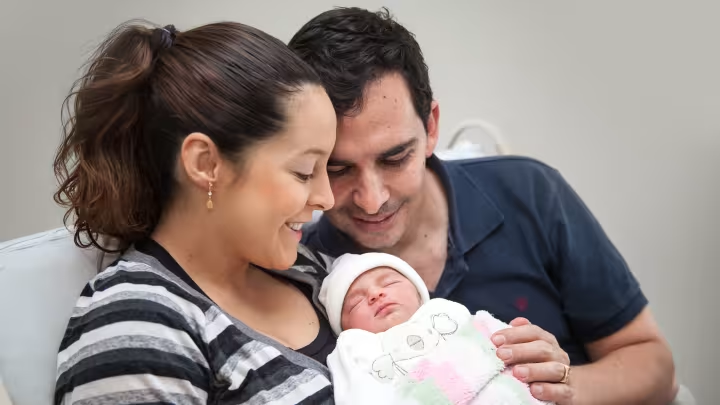




When being with your baby comes at a cost, Sinai Health is easing the burden
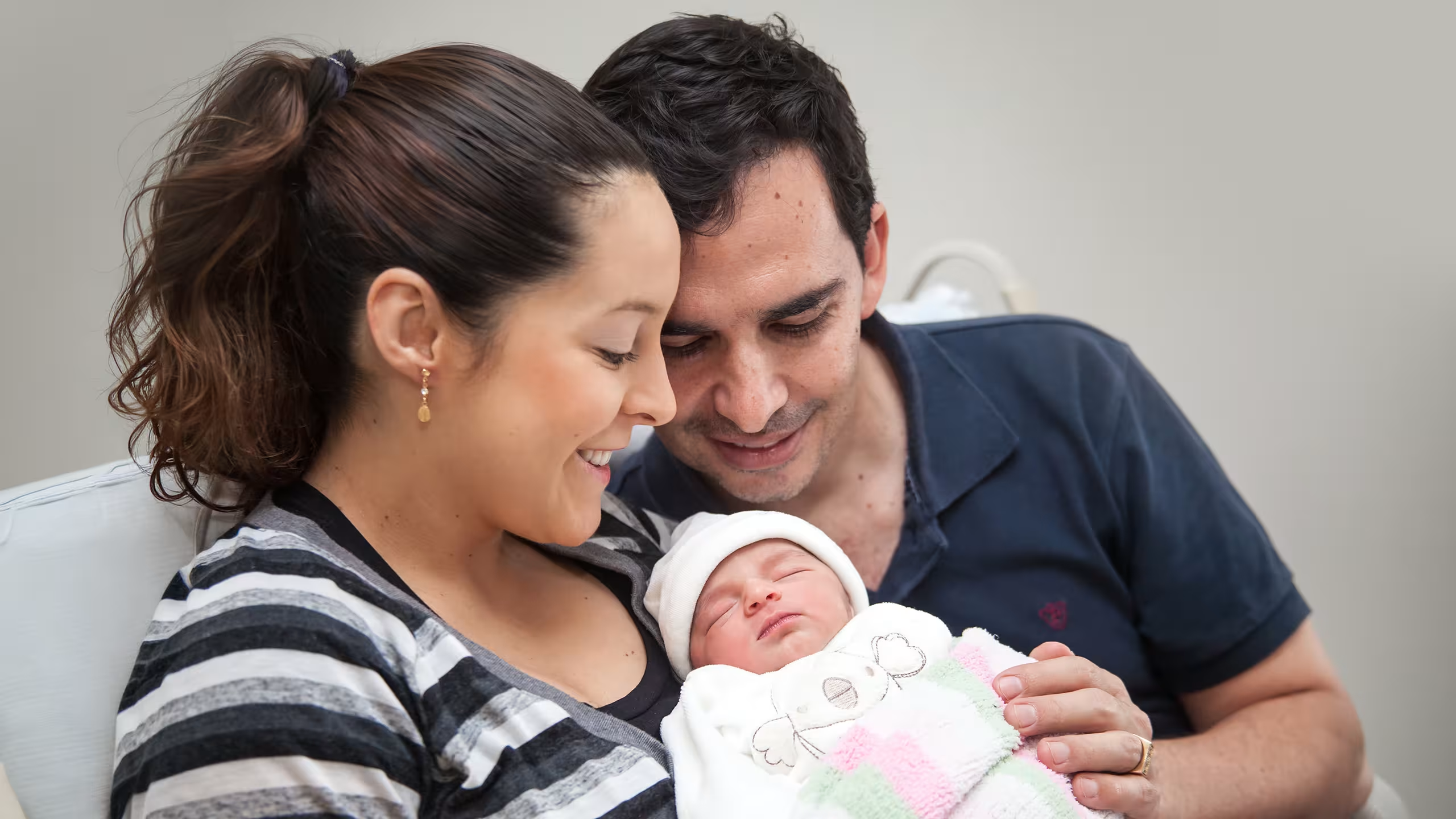
Most families who arrive at Mount Sinai Hospital to have their babies are not expecting to stay long, or thinking about the possibility of spending time in the neonatal intensive care unit (NICU). And patients often do not anticipate how a high-risk pregnancy can lead to weeks away from home, an unplanned hotel stay or an urgent trip to Toronto with little more than the clothes they are wearing.
But for families receiving specialized care at Mount Sinai, those circumstances can quickly become reality.
Sinai Health’s Women’s and Infants’ Patient and Family Support Fund was designed to help patients experiencing high-risk pregnancies and families with babies in the NICU manage the unexpected costs that can otherwise stand between them and the care and connection they need.
“Having a baby at all is financially stressful on families,” says Sabrina Gaon, Director of Social Work, Complex Care and Community Reintegration at Sinai Health. A reduced income during parental leave can already leave families feeling stretched. Add an unexpected hospital stay, and suddenly there are new expenses for parking, gas, meals, accommodation and childcare – for weeks or sometimes months. Depending on a family’s circumstances, those costs can quickly add up to the thousands of dollars in a single week.
The financial impact is widespread. As many as 75 per cent of families experience some degree of economic hardship during their baby’s NICU stay.
The costs no family can plan for
As one of Canada’s leading centres for complex pregnancies and premature babies, Mount Sinai cares for patients from across Ontario and beyond.
Often, Sabrina says, circumstances change with almost no warning. A pregnant patient may attend an appointment in her home community only to be transported to Toronto by air ambulance. “Sometimes a woman arrives at the hospital with nothing,” says Sabrina. “They went to their appointment in sandals and shorts, and the next thing they know, they’re in Toronto. This wasn’t on their vision board.”
If that patient is stabilized, getting home is her financial responsibility. Other families may have to travel to Toronto – sometimes frequently – for specialized prenatal care or procedures, while paying for hotels, transportation and meals along the way.
Even families who would ordinarily consider themselves financially secure can find themselves struggling, she adds. “Once income drops and unexpected expenses accumulate, financial circumstances can change quickly.”
Practical and financial support shaped around each family
At Sinai Health, family-integrated care is a cornerstone of the Newton Glassman Charitable Foundation NICU, part of The Frances Bloomberg Centre for Women’s and Infants’ Health. Parents are encouraged to be at the bedside and, when possible, participate in their baby’s care, which could include changing diapers, taking temperatures or providing skin-to-skin contact.
“We know babies thrive better when they have the connection to their parents,” Sabrina explains. Yet something as simple as the cost of getting to the hospital can stand in the way of that connection. A parent may not have enough money for transportation. Another may need childcare for siblings before they can spend time at the NICU.
“I think families can feel constantly torn,” Sabrina says, “or like they’re never in the right place.”
That is where flexible financial assistance can make an outsized difference. With programs such as the Women’s and Infant’s Patient and Family Support Fund, “we can pay for a taxi or an Uber for you to get there, or your gas,” Sabrina says. “Removing that barrier can give parents the confidence to step into their parenting role.”
For patients experiencing high-risk pregnancies, the needs can look different. A patient may need to remain in Toronto for weeks while being monitored or awaiting delivery, far from home and their usual support network. Assistance with accommodation, meals, transportation or even basic personal items can ease the day-to-day strain of an unexpected hospital stay.
Whether because of language barriers, cultural differences or other personal circumstances, Sabrina says it can take time for social workers and care teams to understand what supports a family needs. “It’s really on us as a hospital team to provide opportunities for them to share their needs, so we can offer the supports,” she says. “I’m particularly proud that the social work team is very skilled at providing that support and being respectful in how they offer it to families.”
And that support doesn’t necessarily end when a baby is discharged. Social workers may identify families who need equipment or supplies to safely care for their baby at home but do not qualify for existing government programs.
That ability to respond to each family’s circumstances is what makes flexible donor funding through the Support Fund so important. “It allows us to respond to the immediate needs that are identified because we don’t always know what they are,” says Sabrina. “It allows us to tailor a gift to someone.”
A community shows up when families need it most
That need resonated deeply with long-time Sinai Health supporters Zack Belzberg and Rebecca Risen.
Rebecca’s connection is personal: She delivered all three of her children at Mount Sinai, and two required NICU care. She has written about the fear of watching her son Lenny rushed to the NICU after he lost oxygen during delivery – and the gratitude she felt knowing that, while her family faced a medical crisis, they did not also have to worry about parking, meals or whether her husband could afford to take time off work.
Zack, a Sinai Health Foundation board member, also has deep family ties to Sinai Health. After touring the NICU together, he and Rebecca saw an opportunity to help families facing not only extraordinary medical circumstances, but financial ones as well.
Together with their families, Zack and Rebecca established a $200,000 matching fund and launched The Residency, an intimate Toronto house party in support of Sinai Health’s Women’s and Infants’ Patient and Family Support Fund. Inspired by Rebecca’s gratitude for the care she and her three children received at Mount Sinai, the inaugural event brought together a community of donors and supporters and ultimately raised more than $500,000 to help patients and families manage the unexpected financial pressures of a high-risk pregnancy or NICU stay.
You can help ease the pressure during some of our patients’ most vulnerable moments
Your support can help cover food, transportation, accommodation, parking, clothing and other essential needs for patients facing high-risk pregnancies and families with babies in the NICU. In circumstances filled with uncertainty, your generosity can give patients and families more capacity to focus on their health, their baby and the care they need – by making sure they have what they need to get through today. Donate today.
Or for more information, contact:
Jess Duggan, Senior Philanthropy Director
[email protected]
Related news and stories
View all News and Stories


