

How innovative sarcoma care helped transform Auston's life
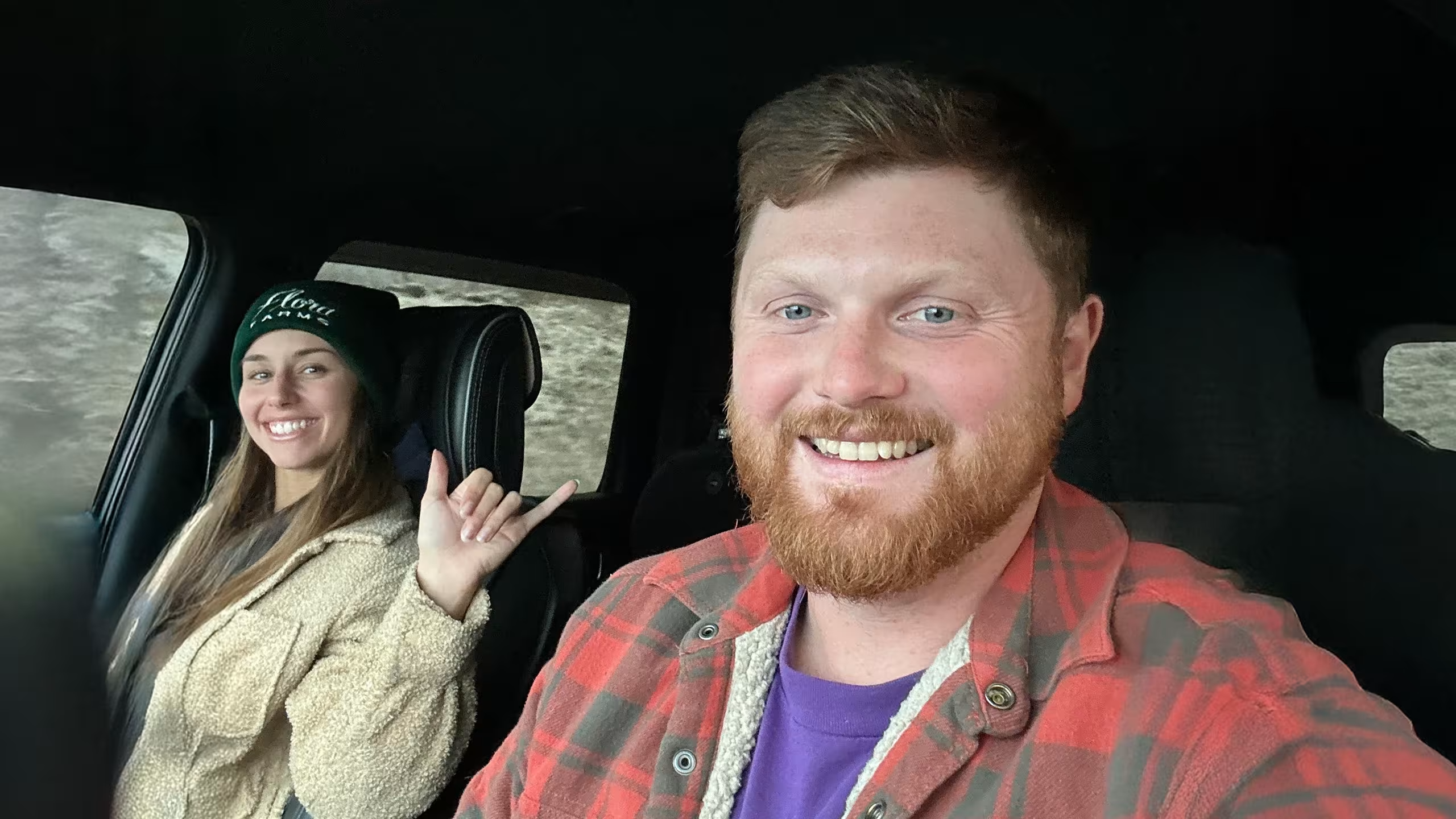
When Auston Ward started experiencing back pain 10 years ago, he thought it was related to his work building and maintaining power lines. So, he saw a chiropractor who later sent him for a CT scan.
Although the scan showed a tumour the size of a tennis ball growing into his spine, Auston was initially told it was not cancerous. However, further scans and a biopsy revealed that not only was it cancer, but a rare sarcoma called alveolar soft part sarcoma (ASPS).
ASPS is among the least common sarcomas — already an uncommon type of cancer — representing about one per cent of soft tissue sarcomas. It tends to grow slowly but is known to spread to the lungs, brain or bones in the early stages, and there is no cure.
Just 19 when he received this diagnosis, Auston was in shock. “I felt pretty numb,” he recalls. “It was a hard pill to swallow. I was always active and fit. I'd never smoked. It was unexpected to say the least.”
Auston was referred to Dr. Albiruni Abdul Razak, a medical oncologist at the Chris Hugh Sharp Cancer Centre at Mount Sinai Hospital. Dr. Abdul Razak is also the lead of Mount Sinai and Princess Margaret Hospitals’ Sarcoma Program, which is the largest multidisciplinary centre of its kind in Canada and combines clinical expertise with leading-edge research infrastructure — including active clinical trials — to advance care and outcomes for patients with rare sarcomas.
A new path forward with immunotherapy
When Dr. Abdul Razak met with Auston, he explained that, unlike many other sarcomas, ASPS tends to be resistant to traditional chemotherapy, which limits treatment options. However, newer approaches using immunotherapy have emerged as more promising for patients, like Auston, for whom surgery is not an option.
Immunotherapy uses the body’s own immune system to recognize and attack cancer cells. Instead of directly killing cancer cells, as chemotherapy or radiation does, immunotherapy works by activating the immune system so that it can better detect cancer and remove the brakes that typically prevent immune cells from attacking.
The Toronto Sarcoma Program has been a global pioneer in this approach to treating sarcomas. It was the first worldwide to define the role of immunotherapy in treating ASPS, which has led to the development of various medications that target this rare cancer.
About six months after his initial appointment with Dr. Abdul Razak, Auston enrolled in a clinical trial through the Sarcoma Program for an immunotherapy drug targeting ASPS. This was the second time Auston had participated in a drug trial. The first drug did not significantly impact the tumour, and Auston had found the side effects debilitating.
During the second trial, Auston started to see results. “Things were shrinking,” he says. He still gets emotional recalling a day when the medical team showed him a photo of his most recent scan. “My tumour had shrunk so much that they were just blown away. It was unbelievable.”
Auston finished the trial in 2017. Today, more than eight years later, he is stable. The tumour in his back is completely gone, and several lesions that had crept into his lungs have shrunk significantly. His health is closely monitored with routine scans every six months.
Auston is excited about his future. He and his wife have travelled extensively over the past few years before settling back home to Newcastle, Ont. They are expecting their first child next year. “Work is going well; I’m back to climbing poles and towers with little to no pain,” he says. “We're working on the next chapter of building a family.”
How donors are helping accelerate progress in sarcoma care
Dr. Abdul Razak says donor generosity has played a large role in transforming care for people facing rare and complex sarcomas. Over the years, philanthropic support has expanded access to vital clinical trials, enabling patients from across Ontario to participate in first-in-class studies. Donor-funded clinical trial staff support has helped reduce wait times and strengthen team-based care, ensuring patients receive timely, coordinated support at every step of their journey.
Thanks to this community support, groundbreaking research is advancing at an unprecedented pace. Scientists are exploring circulating tumour DNA — fragments of genetic material shed by cancer cells into the bloodstream — to detect relapse earlier. They are also pioneering immunotherapy combinations designed to turn “immune cold” sarcomas, which do not naturally trigger a strong immune response, into “immune responsive” tumours that the immune system can recognize and attack.
Donor investment is funding two major areas of progress: the SARQUALITY Trial, which is redefining how supportive care is delivered, and enable the development of advanced blood biobanking methods – the collection and preservation of blood samples for research – that will help researchers better understand why treatments work for some patients and not others.
Donor-supported fellowships at Sinai Health continue to train the next generation of specialists, powering one of the world’s leading sarcoma training programs. Graduates from Toronto now lead major sarcoma centres across South America, Europe, Asia, the Middle East, Australia, and here in Canada, spreading the expertise developed at Sinai Health to patients around the globe.
These investments in clinical care, research and education are making a profound difference today while laying the groundwork for tomorrow’s discoveries. With continued donor partnership, the Toronto Sarcoma Program will remain a global leader in innovation and compassionate care — offering hope, options, and improved outcomes for every patient, like Auston, who walks through its doors.
Your support can change lives
You can help advance our understanding of effective treatment for sarcoma patients like Auston. Behind every success story is the dedication of researchers and clinicians — and the generosity of donors.
With your support, we can reach more patients, advance groundbreaking research and train the next generation of leaders who will transform sarcoma care for years to come.
Together, we can help more patients reclaim their health and hope. Donate today.
Related news and stories
View all News and Stories


