


Dr. Susanna Mak
Deputy Director, Clinical Research, Sinai Health Research
Department of Medicine (Cardiology), Mount Sinai Hospital
Understanding the heart, lungs and circulation to advance patient diagnosis and outcomes
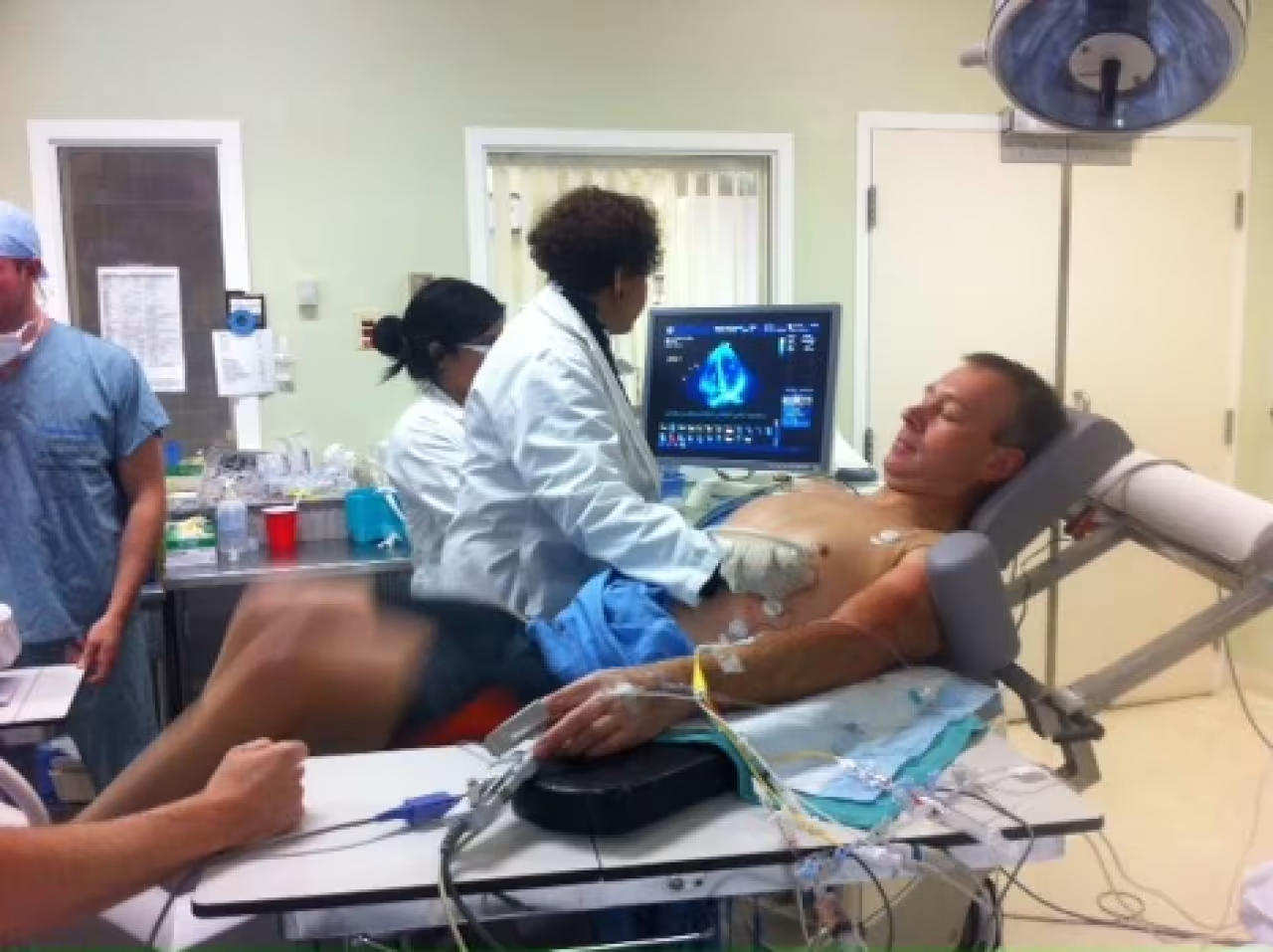
Our lab is a research space dedicated to the study of cardiovascular physiology. We use gold standard, cardiac catheterization-based methods to study the pumping function of the heart chambers and the circulation of blood through the lungs and throughout the body. We are interested in what happens to people as they grow older, and when conditions like heart failure or pulmonary hypertension, which is high blood pressure in the lungs develop. For example, a common sensation that people experience is breathlessness and the inability to exert themselves comfortably.
Breathing problems are the major reason that patients with heart failure need to be admitted to the hospital, and the most common cause of hospital admission for patients older than 65 years of age. Our laboratory has developed specialized diagnostics as an early warning system for heart failure and to understand what holds us back from enjoying the freedom of being active.

Email: [email protected]

16th Floor, Cardiac Catheterization Clinical Research Laboratory, 600 University Avenue
Toronto, M5G 1X5

ORCID: 0000-0003-2193-602X
Sinai Health Physician Profile: Susanna Mak
- 2025–present; Professor, Department of Medicine, Division of Cardiology, University of Toronto, Toronto
- 2024–present; Deputy Director, Clinical Research, Sinai Health, Toronto
- 2024–present; Vice Chair, National Scientific Research Committee, Heart and Stroke Foundation of Canada
- 2023–present; Fellow, Canadian Cardiovascular Society (FCCS)
- 2021–present; Nadal Chair for Advanced Heart Failure Research, Mount Sinai Hospital, Sinai Health, Toronto
- 2020–present; Full Member, Institute of Medical Sciences, University of Toronto, Toronto
- 2019–present; Associate Member, Cardiovascular Sciences Collaborative Specialization, University of Toronto, Toronto
- 2018–present; Adjunct Appointment, Faculty of Heart Sciences, Ontario Tech University, Oshawa, Canada
- 2016–present; Member, Heart & Stroke/Richard Lewar Centre of Excellence in Cardiovascular Research, University of Toronto, Toronto
- 2011–present; Director, Anna Prosserman Heart Function Clinic, Mount Sinai Hospital, Sinai Health, Toronto
- 2009–present; Director, Harold and Esther Mecklinger and the Posluns Families Cardiac Catheterization Clinical Research Laboratory, Mount Sinai Hospital, Sinai Health, Toronto
- 2004; Clinician Scientist, Department of Medicine, University of Toronto, Toronto
Former appointments
- 2019–2025; Department Division Director, Cardiology, Department of Medicine, University of Toronto, Toronto
- PhD, Institute of Medical Sciences, University of Toronto, Toronto; 2003
- Fellowship, Advanced Heart Failure and Transplantation; 1998–2000
- Clinician Scientist Training Program; 1997–2002
- FRCPC, Cardiology; 1997
- FRCPC, General Internal Medicine; 1996
- MD, University of Toronto, Toronto; 1991
- 2025 – King Charles III Coronation Medal Nominated by the Heart and Stroke Foundation of Canada
- 2023–present – Fellow of the Canadian Cardiovascular Society
Studies of the cardio and pulmonary-vascular responses to exercise
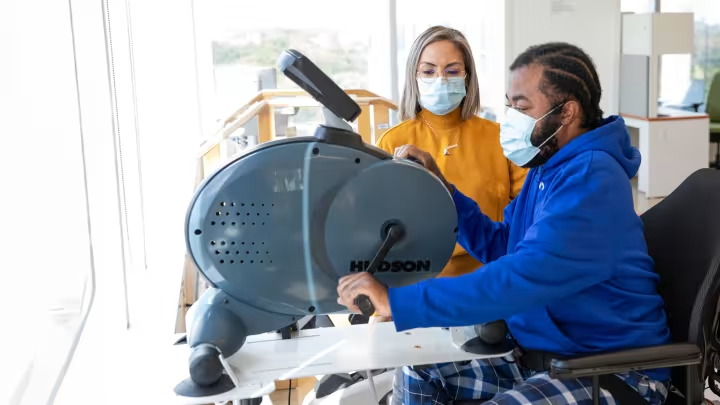
The MakLab uses clinical approaches to physiological research and to study the heart and circulatory mechanisms that enable humans to exercise and accommodate physical stress. One of main areas of interest is to study sex differences particularly as people age. This research aims to explain why men and women may cope with physical challenges and disease quite differently. In addition to exercise, we are also studying the cardiac and circulatory responses that allow us to stand up against the force of gravity.
Studies of pulmonary hypertension and right ventricular function in clinical medicine
The MakLab aims to improve clinical phenotyping for pulmonary hypertension, classified into 5 groups by the WHO. This is a broad set of studies involving patients with advanced heart failure, pulmonary arterial hypertension and chronic thromboembolic disease. In these studies, we aim to improve measurement and treatment of pulmonary hypertension in advanced heart failure and prevent right ventricular failure after heart transplant and other advanced therapies, employ our knowledge of hemodynamics to advance diagnostic approaches to exercise intolerance, types of pulmonary hypertension and orthostatic intolerance.
Novel technologies for physiological monitoring
As the MakLab conducts “gold standard” assessments of cardiac function, we partner with startups, engineers and industry to test and optimize devices to monitor cardiac physiology.
We are always looking for motivated students and researchers to join our team.
Postdocs
The MakLab, in collaboration with the Floras Lab host post-doctoral clinical and research fellowships, (Cardiology Research: Integrative Physiology) in the Division of Cardiology at the University of Toronto. The focus of the fellowship is to learn clinical and procedural skills to perform cardiac catheterization based hemodynamic assessments for patients with shortness of breath, heart failure and pulmonary hypertension, and to perform cardiovascular research. All candidates for the catheterization portion of fellowship must have successfully completed recognized training in adult cardiology. Priority is given to candidates who are expected to return to their referring institution to take up academic appointments. Candidates inquiring about the potential to complete a research fellowship are also encouraged to send information. Please forward your CV, references and research interests to Dr. Susanna Mak, c/o [email protected].
Graduate students
Our research group is part of the Institute of Medical Sciences, Temerty Faculty of Medicine, University of Toronto which has a central admission committee and a rotation system. Graduate students interested in doing graduate studied in the laboratory must first be accepted in the Institute of Medical Sciences.
Summer students
Summer students should contact Dr. Mak directly, c/o [email protected].
Join our team
Visit our job board to see research positions.