


Diagnostic Medical Genetics
Our Diagnostic Medical Genetics team specializes in testing for a wide range of hereditary conditions, including prenatal, perinatal and adult-onset genetic conditions.
Our testing helps physicians understand the genetic factors that contribute to these conditions and how these patients are cared for.
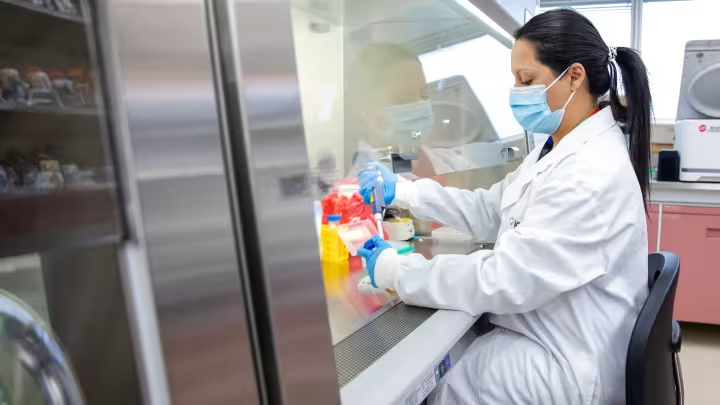
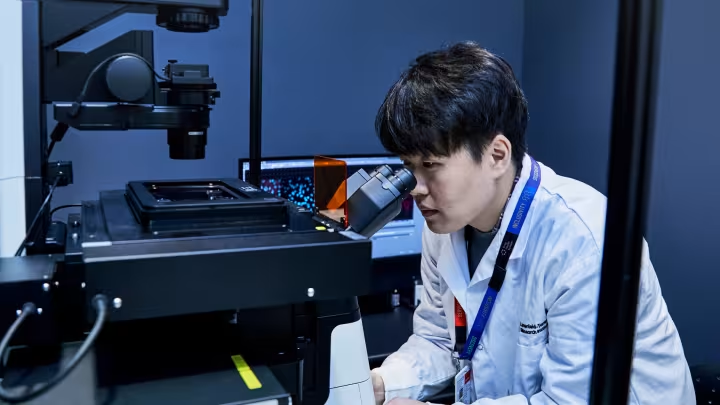
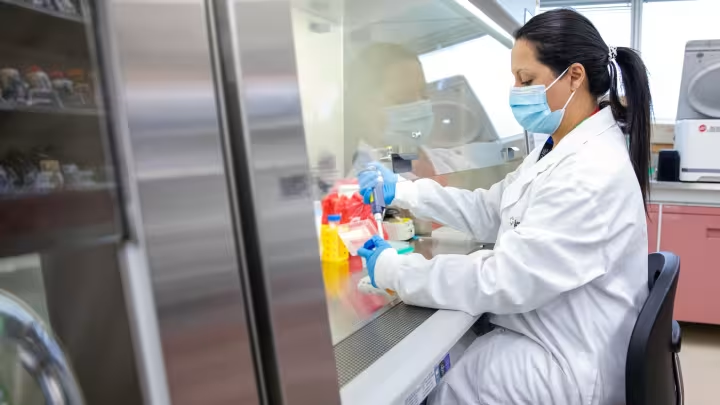
Our testing and reporting are performed by a highly skilled team of certified medical laboratory technologists, technicians, genetic counsellors, genetic variant analysts, bioinformaticians, molecular geneticists and cytogeneticists. This team approach ensures the highest standards or accuracy and expertise in every aspect of our services.
In addition to high-quality clinical testing, our team is dedicated to teaching, education and training.
Cytogenetics
We are committed to upholding the highest standard of care in prenatal and perinatal testing for pregnancies complicated by various factors, including differences identified in a fetus by ultrasound. Accurate prenatal diagnosis supports the best possible care for each patient, which can include changing obstetric management, delivery planning and neonatal care.
Our diagnostic capabilities include quantitative fluorescence polymerase chain reaction (QF-PCR) and chromosomal microarray analysis (CMA), which detect large-scale copy number variations and can identify an underlying genetic cause in up to 40 per cent of fetuses with structural differences.
We specialize in diagnosing molar pregnancies with significantly improved precision and offer blood karyotyping for individuals experiencing infertility and recurrent pregnancy loss.
Advanced Molecular Diagnostics
Our laboratory specializes in a wide array of tests covering hereditary cancer syndromes, tumour biomarkers, blood genotyping and polycystic kidney disease. This testing helps identify affected individuals who may be eligible for targeted therapies and personalized treatments, as well as individuals and families at increased hereditary risk who would benefit from more frequent screening.
Many of these tests use next-generation sequencing (NGS) and sophisticated data analysis. Our laboratory also utilizes technologies such as Sanger sequencing, methylation analysis and multiplex ligation-dependent probe amplification (MLPA).

Cytogenetics
Email: [email protected]
Molecular Diagnostics
Email: [email protected]

Alloimmunized Fetal Blood Group Genotyping - Ontario (PDF)
Alloimmunized Fetal Blood Group Genotyping - Out of Province (PDF)
Consent form for Low Pass Genome Sequencing
Cytogenetics Perinatal Requisition (PDF)
Cytogenetics Prenatal Requisition (PDF)
Hereditary Cancer Testing Requisition (PDF)
Hereditary Chronic Kidney Disease Requisition (PDF)
Hereditary Genetic Disorders Testing Reference Sequences (PDF)
Laboratory reports by fax request form (PDF)