



Dr. Daniel Durocher
Lunenfeld-Tanenbaum Research Institute
Genomic instability, DNA damage response and cancer therapeutics
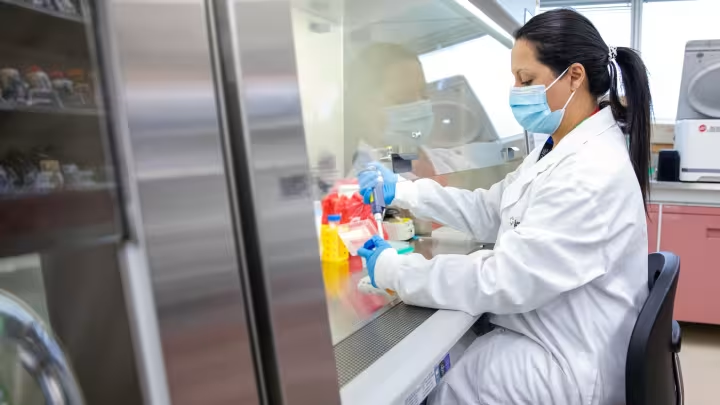
The major objective of the work done in our laboratory is to understand the molecular processes by which cells preserve the stability of their entire DNA – their genome– and to use this knowledge to develop therapeutic strategies, particularly for cancer treatment.
We investigate how cells sense, signal and repair DNA damage, and how defects in these pathways contribute to disease. To address these questions, we use a broad range of approaches, including genetic, biochemical, functional genomic and proteomic methods. We employ the gene editing tool, CRISPR, to systematically inactivate genes in cancer cells. This allows us to identify genes and molecular processes that are essential for the growth of cancer cells, but not healthy cells and which could therefore be targeted for therapy.
Our research has provided insights into the DNA damage response processes and has revealed targets that can selectively kill cancer cells with specific DNA repair defects. A key goal for our team is to translate these findings into therapeutic approaches. We have engaged in multiple successful collaborations with industrial partners to accelerate this process, bridging fundamental research and translation.

Email: [email protected]

Room 1073, 600 University Avenue
Toronto, M5G 1X5

Website: Durocher Lab
Publications: Pubmed
- 2021–present; Co-founder, Induxion Therapeutics
- 2016–present; Co-founder, Repare Therapeutics
- 2011–present; Professor, Department of Molecular Genetics, University of Toronto, Toronto
- 2007–present; Senior Investigator, Lunenfeld-Tanenbaum Research Institute, Sinai Health, Toronto
- BSc, Biochemistry, Université de Montréal, Montreal, Canada; 1990–1993
- PhD, Experimental Medicine, McGill University, Montreal, Canada; 1993–1998
- Postdoctoral fellowship, University of Cambridge, UK; 1997–2001
Our group is near capacity but we are always encouraging motivated researchers to contact us.
Graduate students
Note that our research group is part of the Molecular Genetics department at the University of Toronto, which has a central admission committee and a rotation system. Graduate students interested in doing a PhD in the laboratory must first be accepted in the department. You can find more information here.
Summer students
Summer students are selected from successful applicants to the Research Training Center (RTC) at the Lunenfeld-Tanenbaum Research Institute. Applications are available online and need to be filled by February 28th of each year.
Notable publications


Nature Cancer, 2021


Nature, 2018
Join our team
Visit our job board to see research positions.