


Dr. Graham Collingridge
Lunenfeld-Tanenbaum Research Institute
Harnessing the brain's plasticity to restore memory and cognitive function
We are studying the mechanisms that control the strength of brain cell connections, or synapses, and how this fundamental property, known as synaptic plasticity, affects brain function. The work is critical for understanding the cellular basis of learning and memory in health and disease. Our work aims to find treatments to restore behavioural and cognitive function in people with Alzheimer’s disease, mental illness and neurodevelopmental disorders.
Our research focuses on the hippocampus, a brain region critical for learning and memory. Electrophysiological and imaging recordings are used to investigate two main forms of synaptic plasticity, known as long-term potentiation (LTP) and long-term depression (LTD). In some of the work, our team employs disease models to study the genetic and molecular signalling pathways that go awry.
We are designing and testing new therapies that promote healthy aging and others that aim to combat disease and restore cognitive function. As most neurological, cognitive and psychiatric illnesses involve impairments in neuronal signalling and neuronal plasticity, this research holds great promise in helping the millions of people who are afflicted with a variety of brain disorders.

Email: [email protected]

Room 860, 600 University Avenue
Toronto, M5G 1X5

Website: Collingridge Lab
Publications: PubMed
Google Scholar: Graham Collingridge
ORCID: 0000-0002-9572-5359
U of T Discover Research: Graham Collingridge
Tanz Centre for Research in Neurodegenerative Diseases Research: Graham Collingridge
Wikipedia: Graham Collingridge
- 2021–present; Toronto Dementia Research Alliance (TDRA), Scientific Advisory Committee and Research Operations Committee
- 2021–present; Editor-in-Chief, Molecular Brain
- 2020–present; Affiliate Scientist, Krembil Research Institute, Toronto
- 2020–present; Visiting Professor, Zhejiang University, Zhejiang, China
- 2020–present; Emeritus Professor of Neuroscience in Anatomy, School of Physiology and Pharmacology, University of Bristol, U.K.
- 2019–present; Board of Directors, Brain Canada Foundation
- 2019–present; Director and Krembil Family Chair in Alzheimer’s Research,
Tanz Centre for Research in Neurodegenerative Diseases - 2019–present; Professor, Department of Physiology, University of Toronto, Toronto
- 2015–present; Senior Investigator, Lunenfeld-Tanenbaum Research Institute, Sinai Health, Toronto
Former appointments
- 2020–2022; President, Canadian Physiological Society (CPS)
- 2015–2019; Ernest B. and Leonard B. Smith Chair, Department of Physiology, University of Toronto, Toronto
- 2009; Chair, IUPHAR ionotropic glutamate nomenclature subcommittee
- 1999–2012; Director, MRC Centre for Synaptic Plasticity, School of Physiology and Pharmacology, University of Bristol, U.K.
- 1994–2015; Professor of Neuroscience in Anatomy, University of Bristol, U.K.
- 1993–2010; Editor-in-Chief, Neuropharmacology
- BSc, Pharmacology, 1st Class Honours, University of Bristol, Bristol UK; 1975–1977
- PhD, The School of Pharmacy (UCL), University College London, UK;1977–1980
- Killam Postdoctoral Research Fellow, Dept. of Physiology, University of British Columbia, Vancouver; 1980–1982
- 2024 – GRI Patient Impact Award, CureGRIN Foundation, GRICON 2024, Toronto Canada.
- 2019 – Awarded CBE, Commander of the Order of the British Empire, Services to Biomedical Sciences
- 2017 – Ideas Award, Creative Destruction Lab, Toronto.
- 2016 – The Brain Prize (1 of 3 co-recipients), Denmark
- 2013 – The Feldberg Prize
- 2008 – The Santiago Grisolia Prize
- 2004 – Royal Society Wolfson Merit Award
- 2003 – Gaddam Memorial Prize (The Pharmacological Society)
- 1998 – Founder Fellow, Academy of Medical Sciences
- 1997 – Founder Fellow, European DANA Alliance
- 1997 – Fellow, Institute of Biology
- 1992 – Sharpey-Shafer Prize (The Physiological Society)
- 1991 – Pfizer Academic Award
Our research centres on understanding synaptic plasticity, in particular long-term potentiation (LTP) and long-term depression (LTD). Synaptic plasticity is the fundamental property of the brain that enables the storage of information and, as such, underlies all forms of learning and memory. Synaptic plasticity mechanisms are highly complex and errors in these processes underlie / contribute to the majority of brain disorders.
Fundamentals of Synaptic Plasticity
Our early studies identified the N-methyl-D-aspartate (NMDA) receptor as the main trigger to induce synaptic plasticity. Since then, we have established many critical components and their functions, but much more remains to be discovered.
Short-term potentiation (STP)
STP is a poorly studied form of plasticity at synapses that we believe is critical for everyday memory and is particularly sensitive to impairment in various brain disorders. To study STP, we are combining electrophysiological, genetic, pharmacological and behavioural approaches.
How the number and size of synapses changes in response to activity
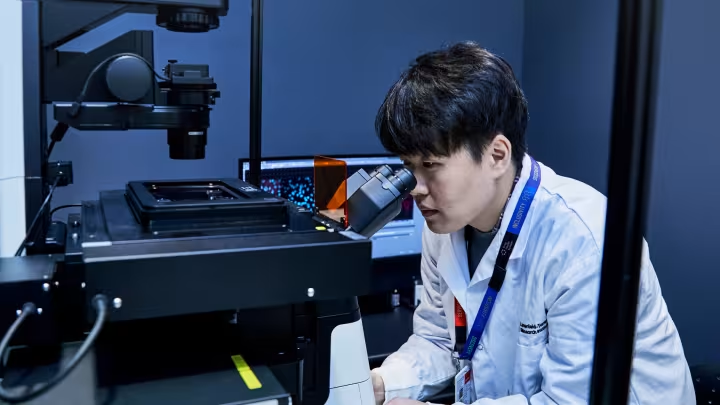
Learning and memory involves changes in the number and strength of synapses but the underlying mechanisms are only partially understood. We are using multiphoton imaging to gain greater insights into this fundamental property of structural synaptic plasticity in the brain. This is important not only because our synapses define us as human individuals but because alterations in synapses underlies most brain disorders.
Clock genes, diurnal rhythms and synaptic function
Our brain function varies during the day and night - with clock genes, such as the PER1 gene, playing a central role. We are studying how Per1 protein controls daily rhythms including sleep, affects synaptic plasticity, and how this action impacts cognition.
Alzheimer’s disease (AD)
Establishing synaptic and cognitive deficits in AD
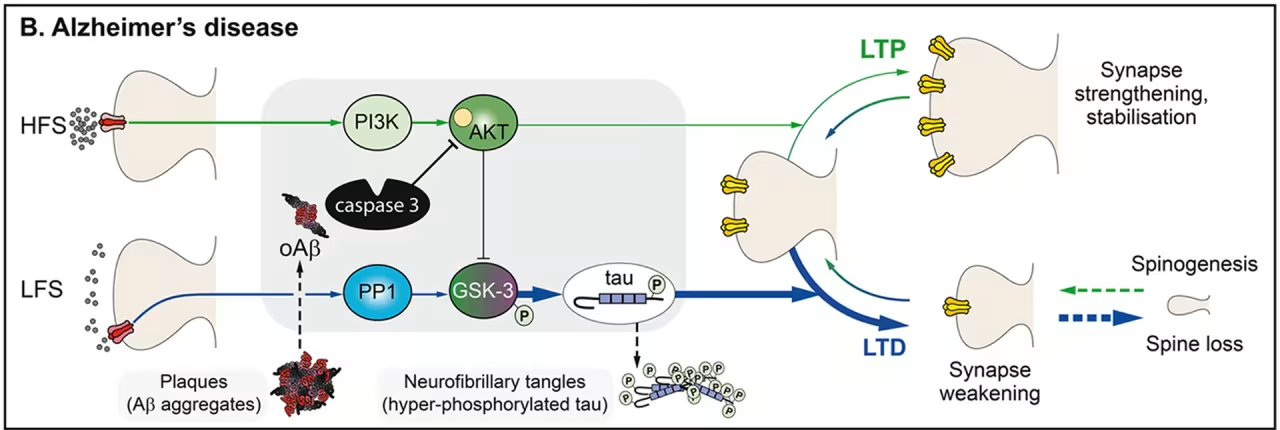
A reduction in synapses constitutes an early stage in the development of AD. We are studying a mouse model of late-onset AD, to establish the earliest deficits - alterations that precede the formation of plaques and tangles. By understandin g and identifying these early synaptic deficits we can start to develop more effective therapeutic strategies.
Determining the molecular basis of AD
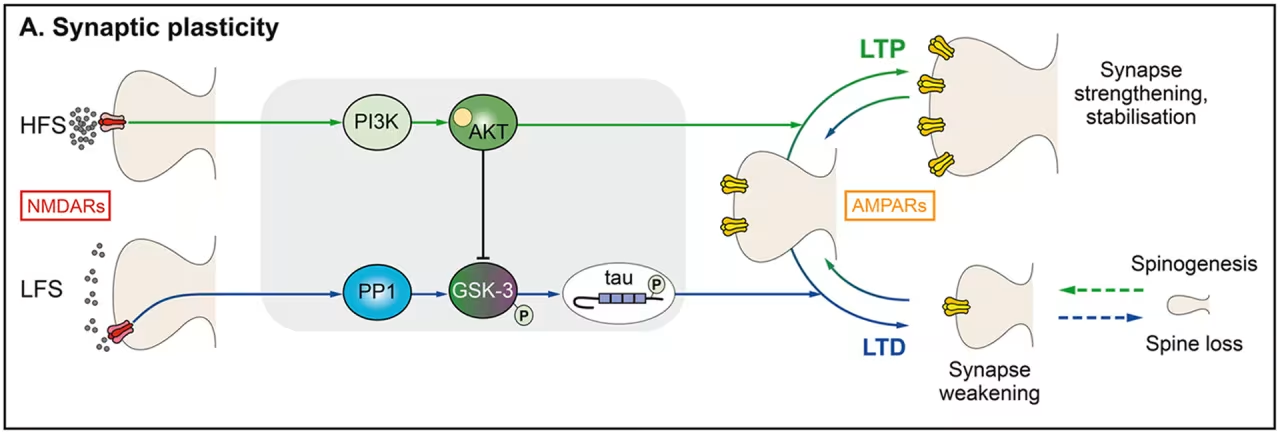
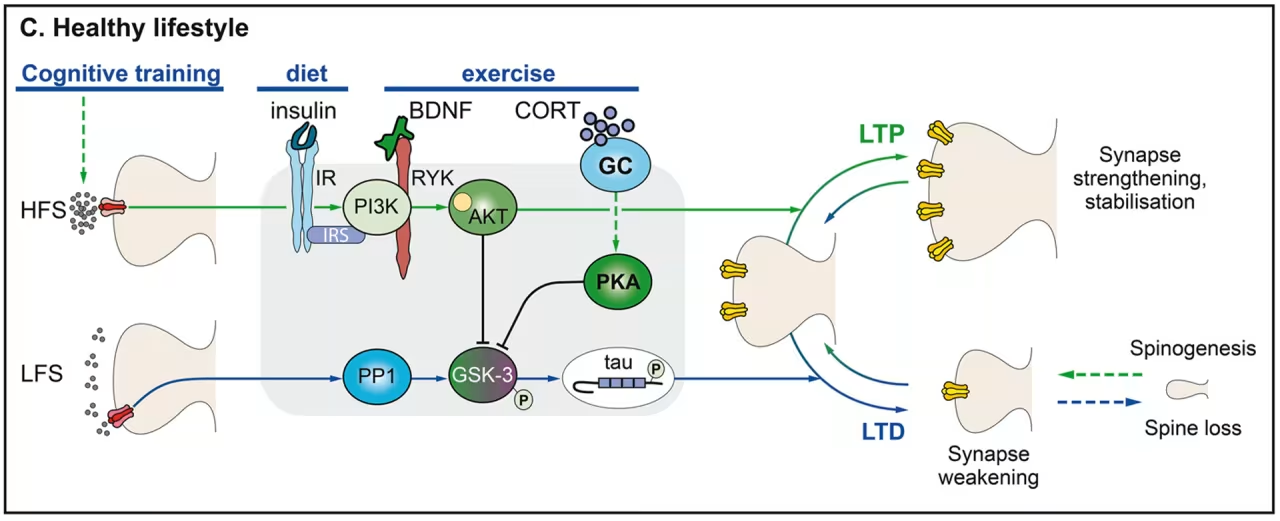
We have identified a biochemical pathway that ordinarily leads to synaptic weakening, a process that impacts learning and memory. We have hypothesised that overactivation of this pathway is the principal cause of AD, via the dysregulation of the enzyme, glycogen synthase kinase -3 (GSK-3), and the cytoskeletal protein, tau. Our current work is aimed at establishing precisely how the GSK-3 / tau pathway operates normally and how it becomes overactive in AD.
The function of endogenous prion protein in the brain
Misfolded Prion protein is the causal factor in prion diseases, including Creutzfeldt-Jakob disease and mad cow disease. It is also critically involved in AD. But what is the physiological function of the endogenous cellular prion protein (PrP) in the brain? We have identified a role in synaptic plasticity and are working to determine the mechanism.
Therapies for brain disorders
Developing novel drugs to regulate synaptic function in disease
Alterations in the function of NMDA receptors and the pathways they activate has been strongly implicated in a wide range of brain disorders, including AD and depression. We are developing novel ligands that potentiate or inhibit the activation of of NMDA receptors as leads for novel therapeutic drugs.
Gene therapy for the treatment of GRIN disorders.
Genetic variations in the N-methyl-D-aspartate (NMDA) receptor can lead to serious neurological disorders, termed GRIN (glutamate receptor ionotropic NMDA). We are characterising models of GRIN disorders, which contain human disease mutations, and are evaluating a promising approach using a novel, patented genetic rescue approach.
Optimising stimulation parameters for the treatment of depression
We have been optimising neuroplasticity induction protocols for strengthening synaptic connections in the hippocampus and prefrontal cortex. Based on this preclinical work, a study in humans is being conducted by our collaborators at CAMH – using TMS, a non-invasive procedure to treat depression and other mental health conditions.
How exercise reduces cognitive decline in mild cognitive impairment
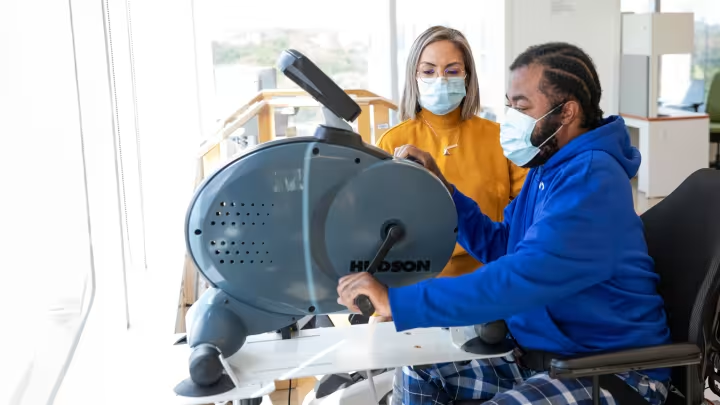
We are studying the impact of exercise on synapses and cognition as mice age and in a mouse model of AD. We are establishing the optimal exercise dose (intensity and duration) and relating this to biomarkers. This information will then inform a clinical trial to be conducted in Canada and the USA.
Neurodevelopmental and Psychiatric Disorders
The study of mouse models of neurodevelopmental and neurological disorders
We are using mouse models of Fragile-X syndrome, CDKL5 deficiency disorder and ALS. The purpose is to understand the alterations at synapses, in particular deficits in synaptic plasticity. This information should inform new therapeutic strategies.
The complement cascades in neuronal health and disease
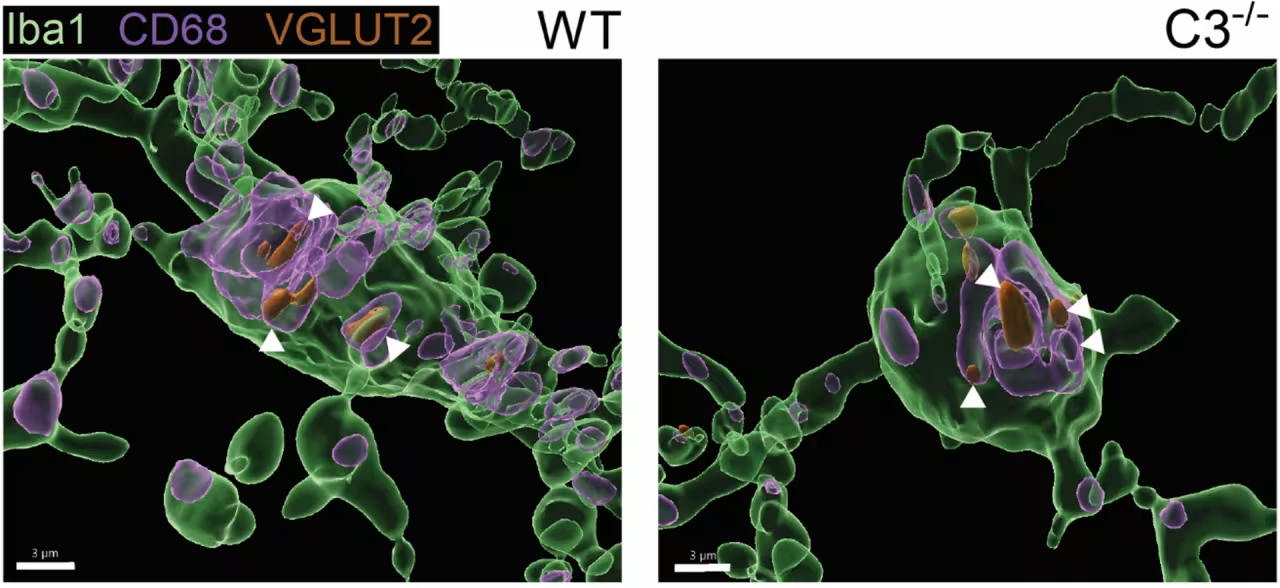
What is the role of the microglia and the complement cascade in synapse elimination during neuronal development and disease conditions such as multiple sclerosis?
The molecular, cellular and circuit basis of autism
Recent human genetic analysis has identified that mutations in a long non-coding RNA, PTCHD1-AS, result in autism with low co-morbidities. This provides a unique opportunity to identify the drivers for the core features of autism (social and repetitive behaviour). We are therefore using mouse genetic models and combining electrophysiology, neuropharmacology, proteomics and behaviour to establish the aetiology of autism.
Notable publications
Molecular Brain, 2025
Neuroscience, 2025
Philosophical Transactions of the Royal Society B: Biological Sciences, 2024
Philosophical Transactions of the Royal Society B: Biological Sciences, 2024
iScience, 2023
Join our team
Visit our job board to see research positions.