






Hip and Knee Surgery
We perform some of the most complex hip and knee joint replacement surgeries in Canada.
What we do
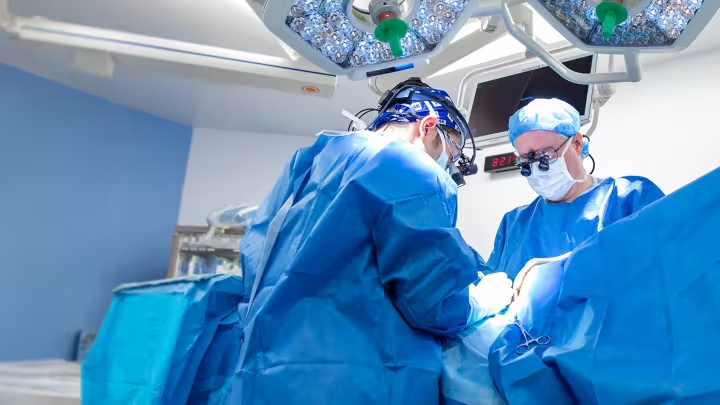
Our orthopaedic surgeons perform some of the most complex hip and knee joint replacement surgeries in Canada. Approximately half of our surgeries correct a failed initial joint replacement.
What to expect
At your first appointment, a medical student, resident, clinical fellow, or advanced practice physiotherapist will assess you before you meet the staff orthopaedic surgeon. They will ask about your medical history and symptoms and perform a physical exam.
Your surgeon will review your diagnostic tests, such as X-rays, and may order more tests to learn about your condition.
If surgery is the best option for you, your surgeon will schedule it and explain the procedure in detail, including the risks, benefits and expected recovery.
Orthopaedic surgeons at Mount Sinai Hospital use a variety of methods to perform procedures and surgeries, including robotics. They will work with you to tailor the surgery to your needs.
You may also be asked to participate in the Patient-Reported Outcome Measures (PROMs) survey. This survey tracks your progress before and after a joint replacement.
Your surgery
Before your surgery date, you will have an appointment at the Pre-Admission Unit. During this appointment, you will meet with a nurse, an anesthesiologist, a pharmacist, and a social worker. You might also have more laboratory testing to prepare for surgery.
Topics covered include how to prepare for surgery, the mobility and assistive devices you might need afterward, and how to prepare your home for the recovery process.
Learn more about what to expect from your appointment at the Pre-Admission Unit.
On the day of your surgery, you will register at Perioperative Services on the 7th floor.
Learn more about what happens before you go into the operating room on the day of your surgery and after surgery in the Post Anesthetic Care Unit (PACU).
A physiotherapist will see you while you are in the PACU. They will talk to you about an exercise plan to help you recover and will teach you:
- How to get in and out of bed
- How to walk safely with your gait aid
- How to manage stairs, if needed
- How to do your hip and knee exercises
Staying as active as possible after surgery helps prevent complications. Our care team will work with you to manage your pain so you recover as comfortably as possible.
If you meet the criteria for day surgery, you will have your surgery and return home the same day. A caregiver must take you home and stay with you for 24 hours afterward. You are responsible for arranging a caregiver before your surgery date. If a caregiver is not available for your day surgery, your surgery may be cancelled.
If you need to stay in hospital after your surgery, you will be moved to the inpatient unit to recover.
Please note that we are a teaching hospital, so you may see medical students, residents or other medical trainees as part of your care. Learners are supervised by other members of our dedicated care team who work together to provide you with comprehensive care.
After your surgery
You will receive a follow-up appointment with your surgeon. If you have a fever, chest pain or shortness of breath in the days after your surgery, please contact the surgeon’s office, call the hospital and speak to the on-call team, or go to the nearest emergency room.
What to bring
- Health (OHIP) card or valid health-care coverage
- A list of your current medications
- A list of your current physicians
Learn more about what to bring on the day of your surgery.

Orthopaedic Surgery
600 University Avenue
4th floor
Take the escalator or Murray elevators to access our services.
Please note that you will check in for your surgery at Perioperative Services on the 7th floor.

See maps, directions and parking for Mount Sinai Hospital.

For phone and fax inquiries, please contact your orthopaedic surgeon's office directly.

Learn more about the strategy, where a single payment is given to a provider to cover the costs of an episode of health care.

Learn more about the Patient Reported Outcome Measures (PROMs) survey, which tracks your progress before and after a joint replacement.
Frequently asked questions
Yes. Some nerve pain is normal after knee replacement, especially in the early weeks. During surgery, small skin nerves get cut, stretched or irritated. This can cause burning sensations, tingling, pins and needles, numbness or shooting pain around the knee or down the leg. These symptoms usually occur outside your incision and can appear anywhere around your knee or lower leg.
These sensations usually improve over weeks to months as you heal. Mild numbness around the scar is common. It may last a long time but is rarely troublesome.
Contact your care team if:
- The pain is severe, worsening, or not improving
You notice new weakness, significant swelling, or changes in skin colour
The pain interferes with sleep or rehabilitation
Something feels “not right” to you
Your care team can assess whether the pain is part of normal healing or whether you need more treatment or advice.
Some pain or soreness is common when you increase activity after hip or knee replacement. Your muscles, soft tissues, and joints are still healing and can get irritated as they adjust to more demands.
This type of pain usually:
- Feels like muscle ache or stiffness
- Improves with rest, ice and pain relief
- Settles within a day or two
Reduce your activity a bit, then increase it more slowly.
Contact your care team if:
- Pain is severe, persistent, or worsening
- Pain does not settle with rest
- You notice increasing swelling, redness, or warmth
- You cannot continue exercises or daily activities
A gradual, steady increase in activity is key to a safe recovery.
The operated leg often feels warmer than the other after hip or knee replacement surgery. Healing increases blood flow to the area, and this can last up to 12 months. Seek medical advice right away if warmth comes with:
Increasing redness, swelling, or drainage from the wound
- Worsening pain
- Fever or chills
- Sudden calf pain or swelling
These symptoms could indicate an infection or a blood clot and need urgent assessment.
Yes. Weakness or a sense that the leg may “give way” is common after hip or knee replacement. It often comes from muscle weakness, swelling, and less confidence in the joint during healing.
Strength and control improve gradually with physiotherapy and regular exercises. This often takes several weeks to months.
Contact your care team if:
- The leg gives way often or suddenly
- Weakness worsens instead of improving
- You have new numbness, severe pain, or loss of control
Using walking aids as advised and continuing your exercises will help improve your stability and confidence as you recover.
Swelling in the leg, ankle, and foot is very common after hip or knee replacement surgery. Gravity pulls fluid down the leg, and this happens more when you are on your feet.
Swelling can last weeks to months. It often improves with:
- Elevating the leg when resting
- Regular movement and exercises
- Ice (as advised)
- Anti-inflammatory medications
- Compression stockings (if prescribed)
Seek urgent medical advice if:
- Swelling is sudden, painful, or much worse
- One leg swells much more than the other, especially in the calf
- You develop calf pain, redness, or warmth
- You have shortness of breath or chest pain
These symptoms could indicate a blood clot and need prompt assessment.
You can usually shower right after surgery, since your dressing is waterproof. But avoid baths, pools, hot tubs, and the ocean until the wound fully heals. This is typically four to six weeks after surgery, though timing can vary depending on how your incision is healing.
Always follow your surgeon’s or care team’s advice, since going into water too early can increase your risk of infection. If you are unsure, check with your health-care provider before bathing or swimming.
You can apply cream or ointment once the incision is fully healed — skin closed, dry, with no scabs, oozing, or signs of infection — usually around three to four weeks after surgery.
Once healed:
- Use a simple, non-perfumed moisturizer, bio-oil, or a silicone-based scar product (if recommended)
- Gently massage the area to help soften the scar
- Avoid applying creams directly over any open areas
If your surgery is in summer or you will be in the sun soon after, apply sunscreen to the healed scar. Do not apply creams or ointments to unhealed wounds. If unsure, ask your surgeon or health-care team before scar care.
Trouble sleeping is common after hip or knee replacement due to pain, swelling, or stiffness. Safe strategies include:
- Pain management:
- Take prescribed pain medications as directed (including before bed, if advised)
- Use over-the-counter pain relief (acetaminophen, NSAIDs) or prescription anti-inflammatories (if recommended)
- Comfort measures:
- Use pillows to support your leg — under your leg, between your legs, or behind your back
- Apply ice or cold packs earlier in the evening if swelling is contributing to discomfort
- Sleep habits:
- Stick to a regular sleep schedule
- Keep the room cool and dark
- Avoid screens or heavy meals before bed
- Sleep aids:
- Avoid taking benzodiazepines while also taking narcotic pain medication
- Consider non-addictive sleep medications, such as melatonin
Important: Do not start new medications or supplements without asking your care team. Contact them if pain is severe or if sleep issues affect recovery.
Yes. Taper gradually and follow your surgeon’s instructions. Over-the-counter medications can replace stronger prescription painkillers. Never stop abruptly without asking your care team.
Using a walking aid after hip or knee replacement is strongly recommended, especially in the first few weeks, to protect your joint, prevent falls, and support safe walking.
Key points:
- Most patients start with a walker, crutches, or a cane
- Your choice of device depends on your strength, balance, and your physiotherapist’s advice
- Use an aid even if confident, as it cuts fall risk and helps your joint heal properly
Your physiotherapist will guide you in gradually reducing use. Weather, slippery conditions, or your surroundings may mean you still need an aid for safety even if you no longer need one at home.
Tip: It’s better to use an assistive device when needed than risk instability or injury.
Sedentary or desk-based work:
- Often around six to eight weeks after surgery, if your pain is controlled and you can sit comfortably and move regularly
- Some people return sooner with modified hours
Active or physically demanding work:
- Often eight to 12 weeks or more, depending on job demands
- This allows time for strength, balance, and endurance to improve
Follow your surgeon’s advice and consider a gradual return or modified duties.
Most patients notice steady improvement in the first six to eight weeks, but full recovery can take up to 12 months. Pain, swelling, and stiffness gradually improve, and strength and endurance continue to increase over time.
Remember that you have a new joint made of different materials than the original. For this reason, some replaced joints never feel completely “normal,” but can still provide excellent function with minimal pain.
After knee replacement, kneeling or deep squatting may feel uncomfortable. It is usually safe once your surgeon and physiotherapist clear you.
For hip replacement, avoid bending your hip more than 90 degrees in the first six to 12 weeks.
Always follow your surgeon’s advice for safe positions, since they may vary by hip replacement approach. Check with your surgeon and physiotherapist.
- Low-impact (walking, swimming, cycling): Often safe a few weeks after surgery, once your surgeon clears you
- High-impact (running, jumping, contact sports): May need three to six months or more, based on your recovery and implant
Build up gradually to prevent injury.
Mild clicking or popping is common and usually harmless. It comes from plastic and metal parts rubbing in the new joint.
Seek advice if it is accompanied by:
- Sudden pain
- Locking or catching of the joint
- Swelling or redness
- Instability
Yes, we strongly recommend an ice machine after a knee replacement. Cold therapy can significantly reduce pain, swelling, and bruising, making your recovery faster and more comfortable.
Benefits:
- Consistent, even cooling over the knee
- Longer, safer use than ice packs
- More convenient than bags or gel packs that melt
- Helps control inflammation, especially in the first few days
- Can improve sleep and mobility
Application time:
- Ice packs: 15 to 20 minutes per session, several times a day
- Ice machines: allow longer, controlled cooling — sometimes for hours at a time — in the first 48 to 72 hours
- Longer, consistent cooling is generally safe and may be more effective than short ice pack sessions
Tips for safe use:
- Use a protective cover or cloth between your skin and the machine
- Follow your surgeon’s or physiotherapist’s instructions
- Stop if your skin becomes red, numb, or uncomfortable
- Left hip or knee (automatic car): Often two to four weeks after surgery, if you are comfortable, can bend and straighten your leg, and can react safely
- Right hip or knee: Typically six weeks or more, since the right leg operates the pedals
Important considerations:
- Stop strong pain medications that dull alertness
- Have full leg control for emergencies
- Always check with your surgeon before resuming driving
Tip: Start with short, low-risk drives and gradually increase distance.
Yes, once you are comfortable sitting and moving your knee, but long trips require care.
Guidelines:
- Take breaks every 45 to 60 minutes to stand, stretch, and walk
- Elevate and move your leg during stops to reduce swelling
- Stay hydrated
- Follow your blood-thinning medication instructions
- Wear compression stockings (if advised)
Timing:
- Short trips: often safe within the first few weeks
- Longer trips: ideally four to six weeks, depending on recovery
Tip: Start with shorter drives to make sure you can tolerate them before longer trips.
Most modern implants do not trigger airport or security metal detectors, although some older implants may. Even if it does trigger the detector, this is a common occurrence that airport staff are familiar with. You do not need a letter or certificate — simply tell airport personnel about your replaced joint(s) if asked.
In most cases, routine dental work or minor procedures do not require antibiotics after a hip or knee replacement.
Key points:
- Antibiotics before procedures are only recommended in specific situations — usually if there is a high infection risk or your surgeon advises it
- The need depends on your medical history, type of implant, and the procedure
- If recommended, antibiotics are taken just before the procedure, not continuously
Important:
- Always check with your orthopaedic surgeon or dentist
- Do not start antibiotics on your own
Modern hip and knee replacements typically last 15 to 20 years or more, depending on activity level, weight, and overall health. However, complications such as infection, loosening, or dislocation can still happen at any time.
Most patients do not need revision surgery in the first 10 to 15 years. Revisions may be needed if the joint wears out, loosens, or develops an infection.
Typically:
- First post-operative visit: two to six weeks after surgery
- Subsequent visits: around three months and/or one year
- After the first year, many patients have follow-up appointments yearly or every few years, depending on their surgeon’s protocol