





A Canadian first: Baby conceived and born after uterine transplant
For people born without a uterus, the dream of carrying a pregnancy is becoming a reality.
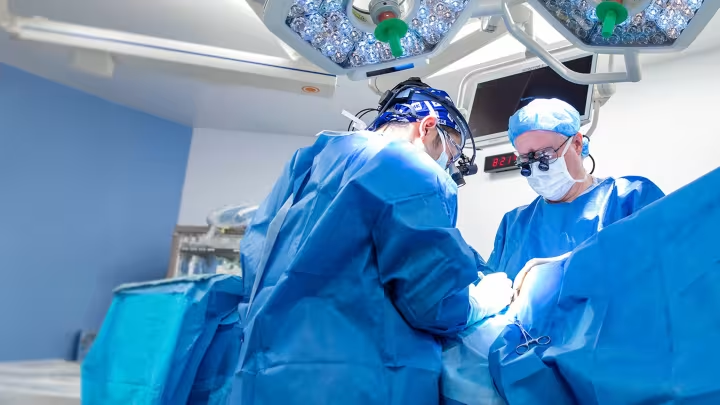
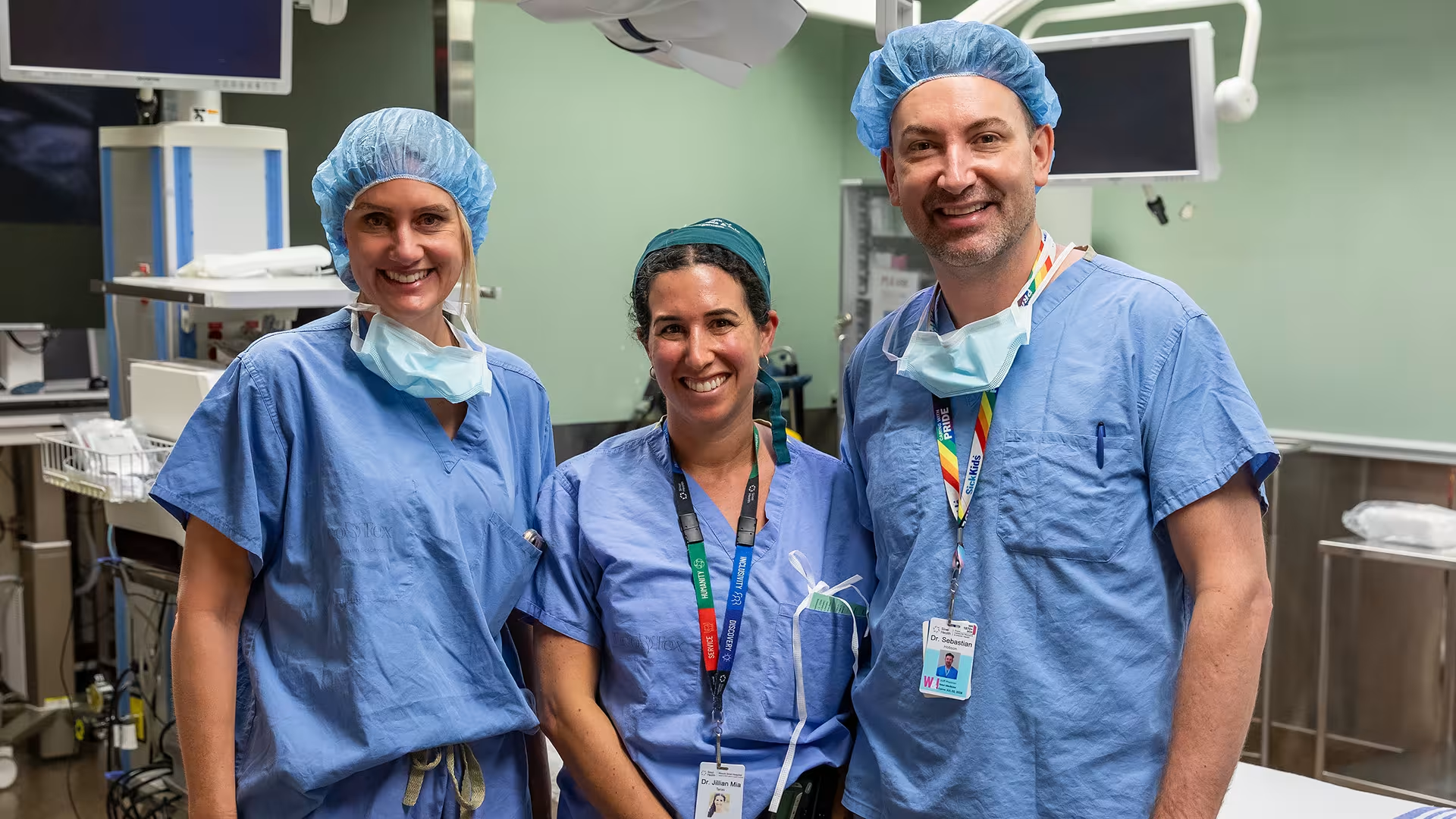
In October 2025, Dr. Sebastian Hobson and Sinai Health’s Complex Obstetric Surgery team delivered a healthy baby by Caesarean section to a patient who had received a uterine transplant in the United States. The pregnancy, conceived with in vitro fertilization (IVF), was achieved under the clinical supervision of Dr. Nigel Pereira and the Mount Sinai Fertility team. It was the first pregnancy of its kind to be carried and delivered in Canada.
The patient, who has chosen to remain anonymous, was born with Mayer-Rokitansky-Küster-Hauser (MRKH) syndrome, a congenital condition in which a person is born without a uterus. The patient underwent a successful uterine transplant at Baylor University Medical Center in Dallas, the largest centre of its kind in the world. Before the transplant, the patient created embryos through IVF; those embryos were transferred into the transplanted uterus after the patient returned to Canada.
Canada has no uterine transplant program of its own, which means patients who receive transplants in other countries typically return to those same centres to deliver. The Dallas team’s confidence in Sinai Health’s Complex Obstetric Surgery program made a Canadian delivery – and this historic milestone – possible.
“Every member of the team knew we were part of something historic, but our focus never changed. We wanted to give this patient the safest possible pregnancy and delivery,” says Dr. Hobson, a maternal-fetal medicine specialist at Mount Sinai. “Seeing both parent and baby do so well was incredibly rewarding.”
Built for complex cases
Formalized in 2019, the Mount Sinai service supports pregnant people who need very complex surgeries during pregnancy and childbirth. From the first clinic visit to the moment of birth, a dedicated team – including specialist nurses, obstetricians, gynaecologists, anesthetists and radiologists – works closely on each case.
“Our patients often come to us because their pregnancies require care that isn't available in most centres,” Dr. Hobson explains. “We bring together the expertise needed to take on those complex cases safely, giving families the best possible chance of a healthy outcome.”
“The surgery is only one part of the journey,” Dr. Hobson adds, “These patients are carrying the emotional weight of years of uncertainty, so supporting their mental well-being is just as important as providing expert medical care.”
Dr. Liza Johannesson, the Dallas transplant surgeon who performed the original uterine transplant, travelled to Toronto to support her patient during the delivery. The care team also included Dr. Lisa Allen, a paediatric and adolescent gynaecologist at Sinai Health who had cared for the patient earlier in life.
Planning the pregnancy itself required specialized expertise. Uterine transplant recipients face unique risks, including transplant rejection. These complications can complicate embryo transfer. Dr. Pereira, whose clinical interests include reproductive imaging and complex IVF procedures, led that work for the Mount Sinai Fertility team.
“I am deeply grateful and overjoyed that our patient’s care resulted in a healthy baby,” says Dr. Pereira. “Against all odds, this outcome is a testament to the patient’s strength, the dedication of our team and the power of collaborative, patient-centred care.”
Looking to the future
For most Canadians who could benefit from uterine transplantation, access remains a barrier. No program currently exists here, and those considering it must travel internationally and cover costs in the hundreds of thousands of dollars.
The first-in-Canada milestone has encouraged Sinai Health’s efforts to pursue a Canadian uterine transplant service of its own.
“We already have many of the clinical and surgical capabilities needed to support a Canadian uterine transplant program,” says Dr. Hobson. “Building that program here would make this life-changing care more accessible for patients across the country.”
Sinai Health is also home to North America’s first Complex Obstetric Surgery Fellowship, a training program that prepares the next generation of specialists by exposing them to complex cases.
The significance of last October’s birth reaches beyond one successful delivery. For the patient at the centre of this story and others with similar diagnoses, it represents something powerful and personal.
“For many people born without a uterus, the ability to carry a pregnancy has never felt possible,” says Dr. Hobson. “This milestone shows that the conversation is changing – from asking whether it's possible to asking how we can make this care available to more Canadians.”
Related news and stories
View all News and Stories


