





Supporting safe discharge: OT and PT in Mount Sinai’s Emergency Department
Most people don’t expect to see an occupational therapist or physiotherapist in the emergency department. At Mount Sinai Hospital, these professionals are integral members of the care team, helping patients safely transition home or to alternate care settings with the supports they need to continue their recovery.
Before December 2024, occupational therapists (OTs) and physiotherapists (PTs) at Mount Sinai weren’t available for functional assessments in the Emergency Department (ED) outside regular hours. Patients who could have gone home were often kept overnight. To address this, Mount Sinai expanded dedicated full-time OT and PT coverage in its ED Monday to Friday until 8 p.m., and Saturdays and Sundays until 4 p.m. In under six months, OTs like Stephanie Seilman assessed 743 non-admitted patients and helped set up discharge plans for 546 of them, letting nearly three-quarters leave the ED without an overnight stay.
A different kind of assessment
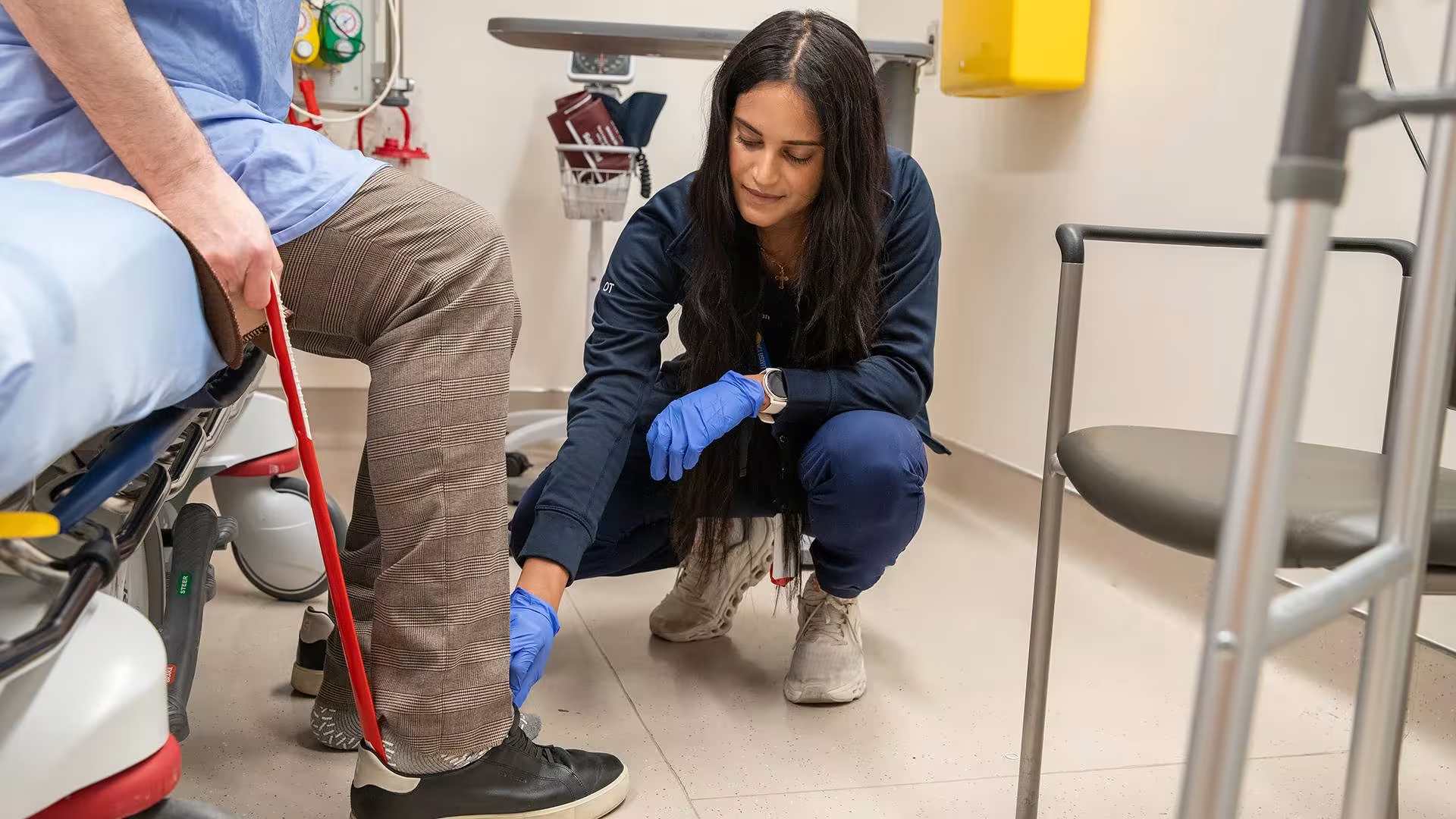
Having OTs and PTs in the ED offers real — and often unexpected — value. “When I first meet a patient, I’m trying to understand how their illness or injury affects their ability to function in everyday life,” Seilman said. “While the medical team is focused on diagnosing and treating the patient’s condition, my role is to understand what that means for their daily life once they leave the hospital.”
Older adults who’ve had a fall are a common example. Although they may be medically stable and ready for discharge, many need a closer look at how they’re functioning before it’s safe for them to go. Depending on what Seilman and her colleagues identify, that can include equipment recommendations, coordination of home and community supports through Ontario Health atHome, caregiver education, or a recommendation for ongoing care in a rehabilitation or other post-acute setting.
Sometimes a functional assessment provides additional clinical information that helps guide a patient’s care. Seilman recalls one case where a patient came in after an ankle injury. Although the initial X-rays did not identify a fracture, a joint OT and PT assessment showed the patient was unable to bear weight as expected. Seilman shared these findings with the physician, and a CT scan found a talus fracture not visible on the initial X-ray.
“Our role wasn’t to diagnose the fracture, but to assess the patient’s function,” she said. “That functional assessment provided additional clinical information that helped guide the next step in the patient’s medical workup.”
Extended hours, improved care
OTs in the ED used to work on a consult-only basis, with therapists pulled from inpatient units, a model that often resulted in delays. Dedicated full-time OTs and PTs embedded in the department has improved timely access to assessment and intervention.
“Having occupational therapy available in the ED during the day and evening means patients can be assessed sooner rather than waiting until the next day,” Seilman said. “It helps reduce delays in care, can prevent unnecessary admissions when appropriate, and supports patient flow during some of the Emergency Department’s busiest hours.”
For patients who have already been admitted and are waiting for a bed, the role of the OT looks different but remains just as important. Early assessment and mobilization help prevent the functional decline that can come with a long ED stay, and cognitive screening can catch concerns that inform ongoing care. The work that begins in the ED gives the inpatient team a foundation to build on. For patients aged 65 and older, OTs are among those who complete a Clinical Frailty Scale to identify those at higher risk and flag any extra support they may need.
“Frailty isn't simply about age. It's a measure of a person's overall health, function and ability to recover after an illness or injury,” Seilman said. “The scale takes into account a person's baseline level of independence, including whether they were completing basic activities of daily living and instrumental activities of daily living independently or with assistance.”
“Understanding a patient’s baseline level of function helps us better understand their recovery needs and determine whether they may benefit from additional supports after leaving the hospital, or whether ongoing assessment and rehabilitation may be needed before they can safely return home,” she added.
Part of the team
At Mount Sinai, dedicated OT and PT coverage were introduced to the ED at the same time. The two disciplines work in tandem, each contributing a piece to the puzzle. ED physicians and Geriatric Emergency Management nurses have noticed the difference, pointing to better collaboration and faster clinical decision-making since OT and PT started working together.
“Having OT and PT embedded in the department means we’re talking in real time, not waiting to connect through a referral or a note,” said Dr. Caesar Lim of the ED. “By the time they’re ready to assess a patient, we’ve often had a conversation about what we’re seeing. That collaboration leads to better care.”
“Working in the Emergency Department has reinforced how important function is in health care,” Seilman said. “Every member of the team brings a different expertise, and it’s through working together that we’re able to make the best decisions for our patients.”
Related news and stories
View all News and Stories


