



Dr. Sun-Ho Lee
Department of Medicine (Gastroenterology), Mount Sinai Hospital
Transforming IBD care through early detection and prevention
We study how Inflammatory Bowel Disease (IBD), including Crohn’s disease and ulcerative colitis, begins, progresses, and returns after surgery, with the goal of preventing these conditions before they cause lasting complications. By working together across gastroenterology, immunology, microbiology and advanced technologies, we investigate how the immune system, the gut barrier or protective lining of the intestines and the microbiome, which includes the bacteria that live within our gut, interact during the earliest phases of disease, often years before symptoms appear.
We also examine why Crohn’s disease frequently recurs after bowel surgery, using this unique post-surgical period as a human model to understand how inflammation re-emerges from a seemingly disease-free state.
Our team integrates cutting-edge laboratory and imaging techniques with long-term studies of individuals at risk for IBD. By identifying early biological changes and the triggers that disrupt gut health, we aim to discover biomarkers that can accurately predict who is most at risk and who may benefit from targeted preventive strategies.
Ultimately, we aim to shift IBD care from reacting to established disease toward intercepting it at its earliest stages. By testing targeted interventions in both high-risk individuals and patients recovering from surgery, we strive to reduce the burden of IBD for patients, families, and health systems worldwide.

Email: [email protected]

Room L3-031, 60 Murray Street
Toronto, M5T 3L9

Publications: PubMed
Google Scholar: Sun-Ho Lee
ORCID: 0000-0003-0344-0047
Sinai Health Physician Profile: Sun-Ho Lee
U of T Profile: Sun-Ho Lee
X: @SunHoLee15
- 2026–present; Full member, Institute of Medical Science, University of Toronto, Toronto
- 2026–present; Member, Prediction and Prevention Cluster, International Organization for the Study of Inflammatory Bowel Disease (IOIBD)
- 2025–present; Co-Director Toronto IBD Research Symposium (city-wide collaborative initiative across Sinai Health, UHN and SickKids)
- 2024–present; Principal Investigator, NIDDK IBD Genetics Consortium Ancillary R01 - Post-Operative Crohn’s Disease Cohort
- 2023–present; Assistant Professor, Faculty of Medicine, Department of Medicine, University of Toronto, Toronto
- 2023–present; Clinician Scientist, Mount Sinai Hospital, Sinai Health, Toronto
- 2023–present; Investigator, Zane Cohen Centre for Digestive Diseases and Lunenfeld-Tanenbaum Research Institute, Sinai Health, Toronto
- 2023–present; Staff Gastroenterologist, Mount Sinai Hospital, Sinai Health, Toronto
- 2022–present; Core Investigator, PROMISE Consortium (integrative multi-omics initiative across GEM, PREDICTS, NHS and international cohorts
- 2019–present; Co-Investigator, Genetic Environmental and Microbial (GEM) Project, Crohn's and Colitis Canada
- PhD with Dr. Kenneth Croitoru, Institute of Medical Science, University of Toronto, Toronto; 2019–2022
- Advanced Inflammatory Bowel Disease Fellowship, Mount Sinai Hospital, Sinai Health, Toronto; 2018–2022
- Gastroenterology fellowship, Asan Medical Center, University of Ulsan, Seoul, Korea; 2016–2018
- MSc in Medical Science, University of Ulsan College of Medicine, Seoul, Korea; 2016–2018
- Internal Medicine Residency, Hallym University Sacred Heart Hospital, Anyang, Korea; 2012–2016
- Internship, Hallym University Sacred Heart Hospital, Anyang, Korea; 2011–2012
- MD, Hallym University College of Medicine, Chuncheon, Korea; 2005–2011
- 2026 – Crohn’s and Colitis Canada Grants-in-Aid of Research
- 2024 – Junior Investigator Award (Meeting of the Minds, Crohn’s and Colitis Canada)
- 2023 – Institute of Medical Science Siminovitch-Salter Award
- 2022 – GI Research Day 2022 (University of Toronto): Top Rapid Fire Abstract Presentation
- 2022 – Hollenberg Research Competition
- 2021 – American Gastroenterological Association (AGA) Council-GRG Basic Science Trainee Award
- 2020–2023 – Canadian Institutes of Health Research/ Canadian Association of Gastroenterology (CIHR/CAG) Fellowship Award
- 2020 – Mount Sinai Hospital Graduate Studentship Award
- 2020 – Mount Sinai Hospital Graduate Studentship Award
- 2018 – Ogden-Goldstein Advanced Fellowship in Inflammatory Bowel Disease Award
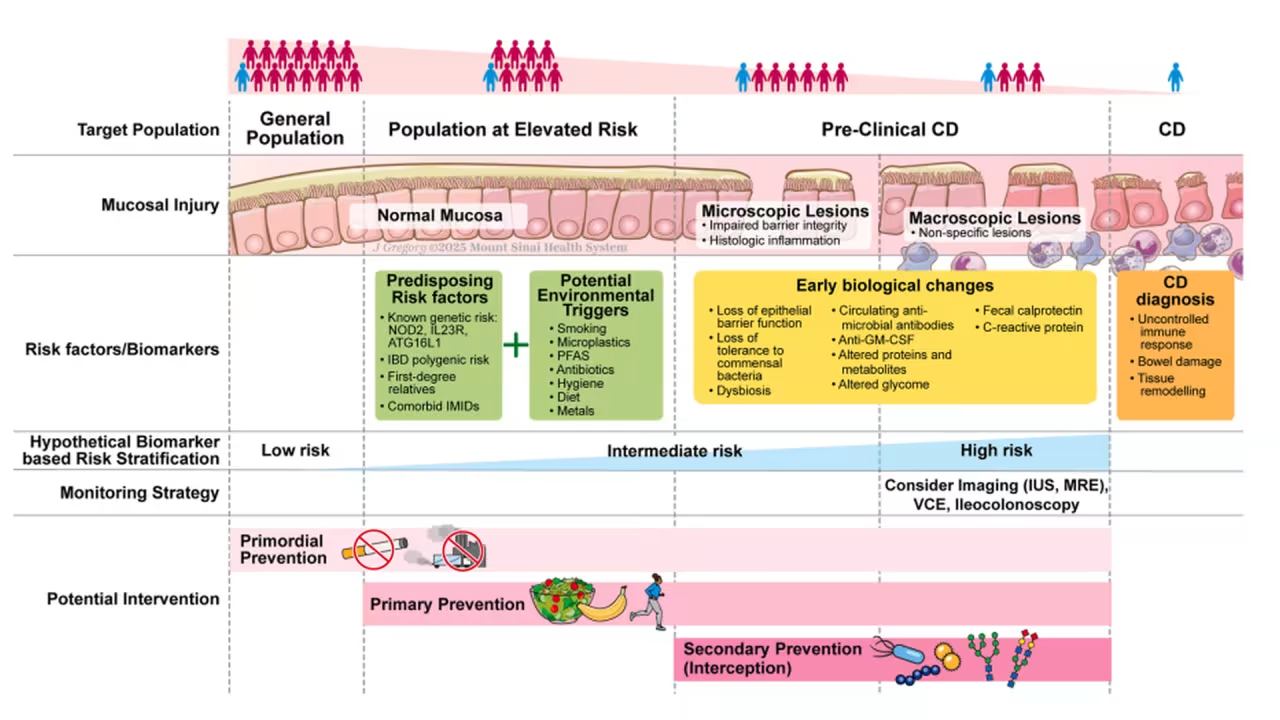
Prediction and prevention of Crohn's disease in the preclinical phase
Crohn's disease is diagnosed once inflammation is established, yet the underlying pathogenic processes begin years earlier. Through the GEM Project, we prospectively follow a large cohort of healthy first-degree relatives with serial biospecimen collection, allowing the preclinical interval to be interrogated in individuals who subsequently develop disease.
Using genetics, gut microbiome composition, measures of gut barrier function and fecal calprotectin, we have developed and validated an integrative risk score that identifies first-degree relatives at substantially elevated risk of Crohn's disease over the subsequent decade. In parallel, we apply proteomic, metabolomic and metagenomic profiling to pre-diagnosis samples to characterise the earliest biological changes and to refine risk stratification further.
The translational question is how risk stratification should inform intervention: which individuals warrant preventive treatment, at what risk threshold, and what endpoints, effect sizes and sample sizes are realistic for interception trials in an asymptomatic population. This work is moving toward implementation through a planned high-risk clinic for first-degree relatives, the next phase of the GEM Project, led by Drs. Kenneth Croitoru, Sun-Ho Lee and Williams Turpin.
Trainees gain experience in prospective cohort design, high-dimensional data analysis, machine learning and risk-prediction modelling, with the opportunity to contribute to the design of prevention trials.
References: Gastroenterology 2026;170:233-239; Gastroenterology 2025;168:150-153; Gastroenterology 2025;168:902-913
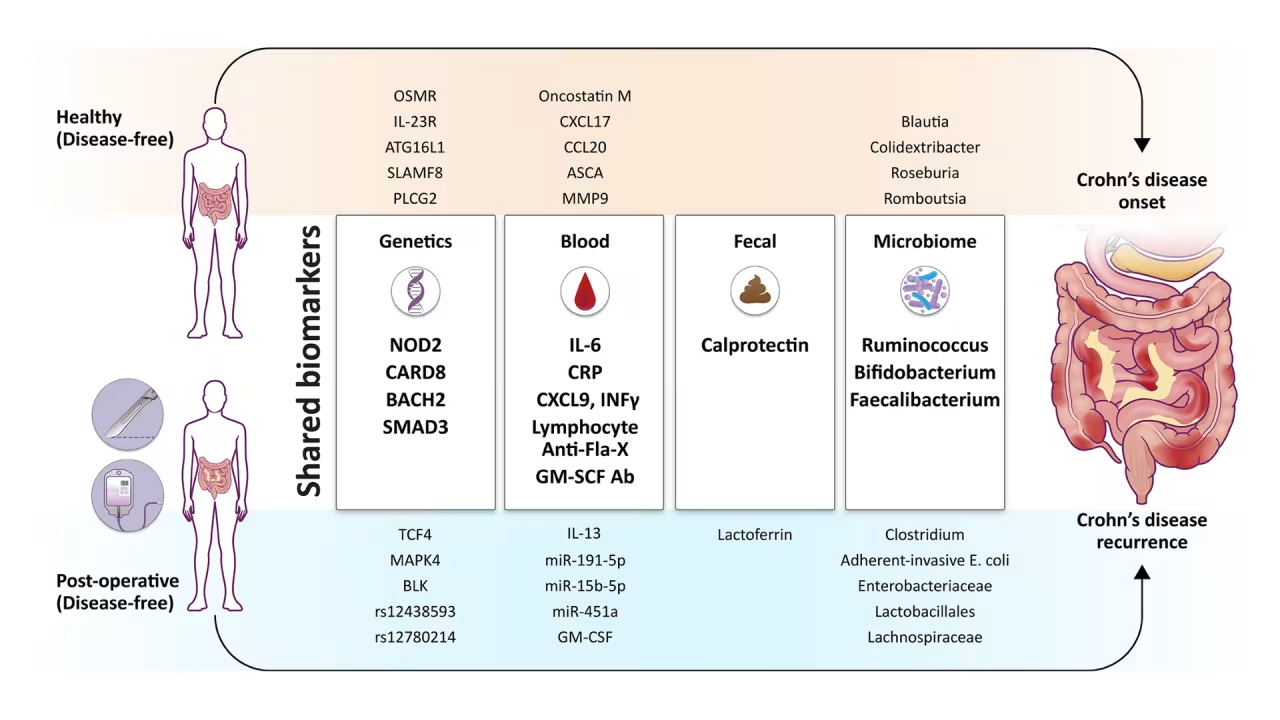
Postoperative recurrence as a human model of Crohn's disease onset
Up to 70% of patients undergoing ileocolic resection for Crohn's disease develop endoscopic recurrence in the neo-terminal ileum within one year, typically well before symptoms return. The transient disease-free state that follows resection provides a defined temporal and anatomical starting point that is not available at first onset.
Our work is based in the prospective postoperative Crohn's disease study of the NIDDK IBD Genetics Consortium, a multicentre cohort with serial blood, stool and ileocolonoscopic biopsies collected preoperatively and through the first postoperative year and beyond. Mount Sinai Hospital is a key recruitment site, under Site Director Dr. Mark Silverberg. Our NIH/NIDDK R01, an ancillary study to the consortium, supports the biomarker and multi-omic analyses of these samples, testing the hypothesis that the disease-free postoperative state biologically mirrors the earliest preclinical stages of new-onset disease.
Genetic, immune, microbial and barrier markers associated with progression in the two settings show substantial overlap, including CXCL9 and interleukin 6, Faecalibacterium and Ruminococcus signatures, and markers of gut barrier dysfunction. If these shared signatures reflect common pathogenic pathways, the postoperative setting offers a tractable human model in which to test biomarker-guided preventive strategies applicable across the Crohn's disease spectrum.
Trainees gain experience in clinical cohort design and conduct, endoscopic and histological outcome adjudication, and the integration of mucosal and circulating multi-omic data, working alongside the IBD clinical team at Mount Sinai Hospital.
References: Gut 2026 (online ahead of print)
Funding: National Institutes of Health / NIDDK R01; Crohn's and Colitis Canada Grants-in-Aid of Research.
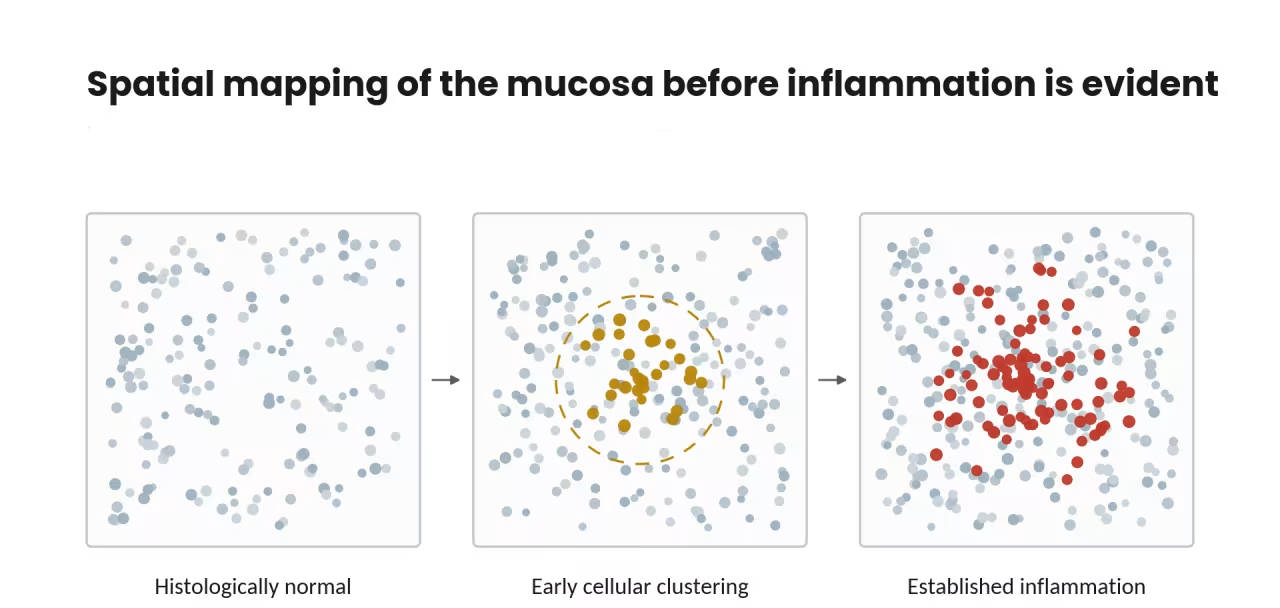
Spatial characterization of the mucosa before inflammation is evident
Circulating biomarkers indicate that pathogenic processes are underway but not where they are occurring. We apply imaging mass cytometry, spatial transcriptomics and single-cell approaches to intestinal biopsies obtained before clinically evident inflammation: healthy first-degree relatives at elevated risk, and postoperative patients with an endoscopically normal neo-terminal ileum.
The emphasis is on cellular organization rather than composition alone. Inflammation in IBD is spatially structured, and we ask whether the cellular neighbourhoods characteristic of established disease are already detectable in histologically normal mucosa, and whether their presence predicts subsequent progression.
The work is conducted with Dr. Hartland Jackson at the Lunenfeld-Tanenbaum Research Institute, whose group specialises in imaging mass cytometry and spatial biology, and with Dr. James Conner in the Department of Pathology at Mount Sinai Hospital, who provides histopathological characterisation of all specimens.
Trainees work at the interface of imaging and computational analysis, including cell segmentation, spatial statistics and neighbourhood analysis, alongside histological and clinical annotation. Prior imaging experience is welcome but not required.
Funding: National Institutes of Health / NIDDK R01; Crohn's and Colitis Canada Grants-in-Aid of Research.
We are always looking for motivated researchers to join our team.
Postdocs
Our research group is always interested in recruiting highly motivated postdoctoral fellows with a strong publication record in IBD pathogenesis, host–microbe interactions, mucosal immunology, or computational analysis of multi-omics data. Please forward your CV, references and research interests to Tharsika Suntharalingam, administrative assistant to Dr. Sun-Ho Lee ([email protected]).
Graduate students
Our research group is part of the Institute of Medical Science (IMS) at the Temerty Faculty of Medicine, University of Toronto, which requires that a supervisor be identified before admission to the graduate program. Graduate students interested in doing an MSc or PhD in the group should first get in touch through Dr. Sun-Ho Lee's administrative assistant, Tharsika Suntharalingam ([email protected]).
Summer students
Summer students are exclusively selected from successful applicants to the Research Training Centre (RTC) at the Lunenfeld-Tanenbaum Research Institute. Applications are available online and need to be submitted by February 28th of each year.
Notable publications
Gastroenterology, 2026
Gut, 2026
Gastroenterology, 2025
Gastroenterology, 2023
Gastroenterology, 2021
Join our team
Visit our job board to see research positions.