





Exercise and Fitness
Why is exercise important for people with cancer?
Exercise can help you feel better while you are getting treatment for cancer. It can:
- Give you more energy
- Reduce fatigue (tiredness)
- Make you stronger
- Help keep your bones healthy
- Help you sleep better
- Keep your heart healthy
- Improve your mood
- Reduce feelings of anxiety and depression
- Help you manage stress
Tip: 10 minutes of light exercise each day can help you feel better.
Starting an exercise routine
Talk to your health-care team before you start a new exercise routine. It is never too early or too late in your treatment to start exercising.
If you do not already exercise:
- Do some light exercise instead of sitting or lying down
- Start with something small or something in your normal routine like walking at a mall or walking your dog
If you already exercise:
- Fatigue or lack of energy might make it hard to keep your regular routine
- Add more exercise every day until you are back to your normal routine
If you have metastatic cancer in your bones, talk to your oncologist before you start exercising.
Tips to help you get started
- Choose exercises you enjoy doing
- Include some exercises that get your heart rate up and others that build strength and flexibility
- Do strength training two days each week
- Even short exercise sessions of five minutes a few times a day are good for your body and help you reach your fitness goals
- For the best fitness, exercise for 30 minutes five times a week
Do exercise that feels right for you
You can exercise on your own or in a group. Exercising with others may give you the support you need to keep going. Some hospitals and community organizations offer group exercise programs for people with cancer.
Choose exercise that is not too easy or too hard for you. You should be able to talk but not sing while doing the exercise. You can still exercise if you have limited mobility or trouble with standing or balance. Many exercises can be adapted or done while sitting, such as:
- Seated yoga, Pilates or dancing
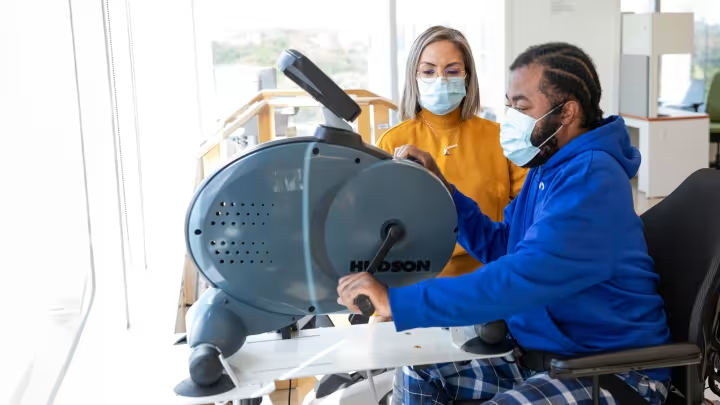
- Using an arm cycle or resistance bands
- Swimming or water aerobics
It is important to keep your body moving no matter what your level of ability. Exercise at your own pace. Think about your energy level and choose activities that feel comfortable.
Types of exercise
Aerobic exercise
Aerobic exercise is sometimes called cardio. It:
- Gets your heart rate up
- Makes you breathe faster
- Pumps blood and oxygen to your muscles and tissues
Light exercise (easiest)
Light aerobic exercise should feel easy. It can include:
- Slow walking
- Slow bike riding
- Gentle swimming
- Light housework like dusting or sweeping
- Light gardening
Moderate exercise (medium)
Moderate aerobic exercise should feel like a challenge. It can include:
- Brisk walking
- Bike riding with some hills
- Swimming
- Ball sports like volleyball, softball or tennis
- Yoga
- Ballroom dancing
Intense exercise (hardest)
Intense exercise should feel like you are pushing yourself very hard. It can include:
- Running, jogging or race walking
- Fast bike riding
- Hiking
- Competitive sports like soccer or basketball
- Stair climbing
Resistance or strength training
Resistance or strength training improves your muscle strength. You can do strength training using:
- Free weights, like dumbbells or barbells, and household items like soup cans
- Resistance bands
- Weight machines
- Your own body weight, like push-ups
Strength training is often done in repetitions (reps) and sets. A rep is a single movement. A set is a group or series of reps. For example, 30 biceps curls can be broken down into three sets of 10 biceps curls. Be sure to rest between sets.
Light strength training (easiest)
Use a small amount of weight (light dumbbell or kettlebell) or resistance (loose resistance band or tube). If you are a beginner, start slowly. You should be able to comfortably do more reps.
Moderate strength training (medium)
Add more reps into your set to make the exercise harder. When you are ready, add more sets. If you still want more of a challenge, you can add more weight.
Intense strength training (hardest)
This type of strength training is when you push yourself as hard as you can. Do intense training only with a qualified exercise professional to make sure you are doing it safely.
Exercising safely
Exercising before, during and after cancer treatment is safe for most people. Ask your health-care team if you need to change your exercise routine to keep it safe for you.
- If you have metastatic cancer in your bones, talk to your health-care team before you start an exercise program
- Warm up for a few minutes before you exercise to get your muscles moving
- Good warm-up activities include:
- Marching on the spot
- Stretching
- Walking
- Gentle arm circles
- Cool down after you exercise with light exercises (like those from your warm-up) and stretching
- Respect your pain and fatigue levels and only do what feels good and safe
- After surgery, most people can return to their regular exercise routines in about four to eight weeks
- Ask your surgeon about exercises to help your body recover and when it is safe to return to your pre-surgery exercise routines
Stop exercising if you feel:
- Dizzy
- Short of breath
- Chest pain
- New pain or more pain than usual
- New or more swelling in your arm(s) or leg(s)
- Increased fatigue and/or decreased energy
- More sweaty than usual for no clear reason
If you notice any changes in your body after exercising that are not normal for you, tell your health-care team at your next visit.
If you need help with exercise, talk to:
- A physiotherapist, occupational therapist or a qualified exercise professional who is trained to work with people with cancer
- Your family doctor
- Your cancer health-care team
What is a qualified exercise professional?
Exercise professionals in Ontario can have different names depending on their training. Registered kinesiologists and certified exercise physiologists (CEP) have university education about how the body works. It is important that your exercise professional has training or certifications for working with people with cancer.
Tip: Ask your health-care team, “Is there any person, group or class that can help me reach my exercise goals?”
Ask your exercise professional some questions about their experience in helping people with cancer:
- What type of training or certifications do you have?
- Do you have training for working with people with cancer?
- Do you know of any exercise programs for people with cancer in our community?
- Can you recommend a routine for me that is safe?
If you have questions or concerns about exercise, speak to your health-care team.
Where to get more information
For more information on this symptom, or for guides to help manage other symptoms, visit Managing Symptoms, Side Effects & Well-Being.
If you need this information in an accessible format, contact 1-855-460-2647, TTY: 416-217-1815, or [email protected].
Special thanks to the Patient and Family Advisors and the Clinical Advisory Group who worked on this guide.
This patient guide was created by Cancer Care Ontario to provide you with information about exercise when you have cancer. It should be used for information only and does not replace medical advice. This guide does not include all information about exercise when you have cancer. Always ask your health-care team if you have questions or concerns. The information in this guide does not create a physician-patient relationship between Cancer Care Ontario and you.