


Meet the scientists shaping the future of discovery at Sinai Health
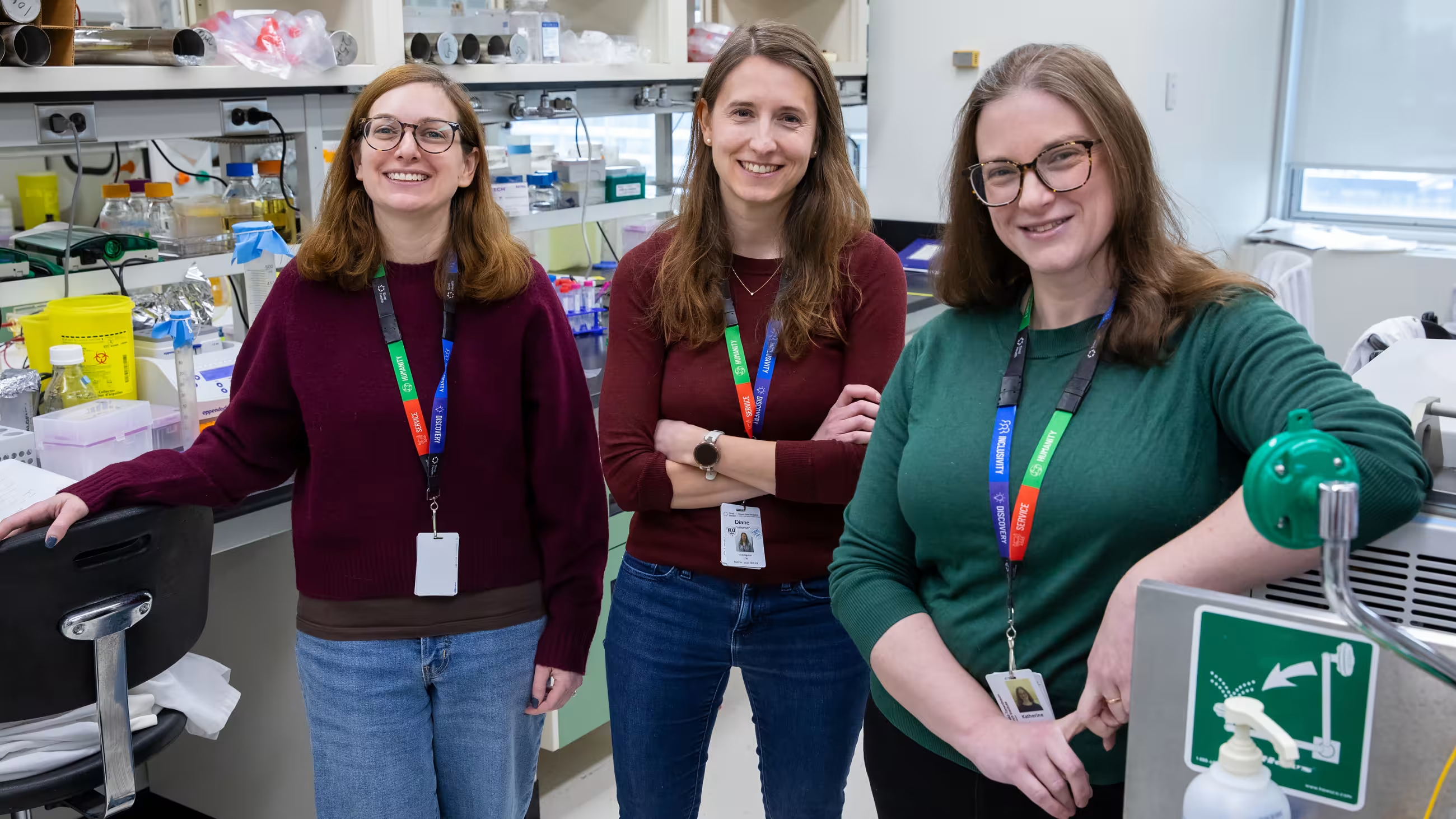
February 11 marks the International Day of Women and Girls in Science, a global moment to champion equitable access, opportunity and representation in science, technology, engineering and mathematics (STEM). It’s a day to celebrate the women and girls whose curiosity and innovation drive discovery, advance research and shape the future of health.
Mapping tumour structure one cell at a time
Dr. Alissa Greenwald combines computational and experimental approaches to uncover the organizational principles of tumours, particularly those of the brain. By deepening the understanding of how tumours are structured, her work aims to reveal new therapeutic targets.
What drew you to science and to your field of research?
As a child, I loved art. Before I discovered science, I explored the world by observing patterns and drawing. I was also very curious about how things work. As a teenager and young adult, I sought to make sense of the world around me through science. My field - spatial biology - lies at the intersection of science, mathematics, and art. I am captivated by visual patterns and how they can be described quantitatively to distill complex biological systems to their essence. My work is deeply meaningful to me, because I hope that someday it will improve the lives of cancer patients.
What excites you most about science now?
We have tools and methods now that were beyond my wildest imagination when I started graduate school. We can now visualize how individual cells within a tumour form repeated patterns. Now that we have developed quantitative approaches for mapping these recurring patterns, I'm excited to explore how we can exploit these findings as targets for better cancer therapies.
What would you say to a girl who’s thinking about becoming a scientist?
Of course I would say go for it! I would also say you don't need anyone's permission or approval. Sometimes you just need to push doors open yourself. It can sometimes be easy to get distracted by challenges but it's important to focus your energy on all the exciting things that you can do, keep moving forward, and surround yourself with supportive people. Be a positive force.
Dealing with stress at the cellular level
Dr. Diane Haakonsen uses a multidisciplinary lens to study how stress responses are switched off in both health and disease. Insights into how these pathways are regulated, in cancer and in neurodegenerative disorders including dementia, may point to new avenues for treatments.
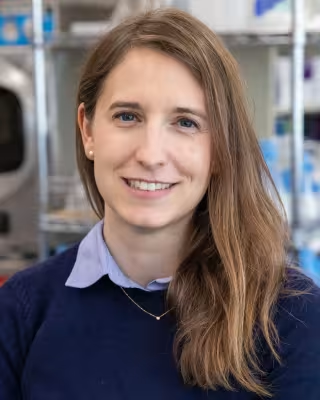
What drew you to science and to your field of research?
As a kid, I was always very curious about how things worked. My parents were family doctors which naturally directed my curiosity towards diseases and why people got sick. I wanted to get to the root cause of what made people sick and understand the molecular mechanisms behind disease. That’s how I got super interested in biochemistry and molecular biology. It allows us to understand how proteins, which are encoded by our genes, work inside our cells, and how mutations in these proteins lead to disease. Because once we understand diseases at the molecular level, we can think about strategies that could cure them.
What excites you most about science now?
I am very excited about how fast things are going from discovery to therapies and how collaborative science has become. The molecular mechanisms that we discover in the lab are further enriched through collaborations with clinicians and chemists and that ultimately leads to new therapies for patients. This collaboration is especially true at Sinai Health and within the U of T community.
What would you say to a girl who’s thinking about becoming a scientist?
I would tell her to go for it and that there is no reason she can’t do it. If you are curious, like to problem solve and want to work hard on questions that have the potential to help society, science needs you. Don’t limit yourself; science is diverse and made richer by the diverse minds that contribute to it. Find good mentors that will support you and good environments where your passion can grow.
Harnessing dying cells for organ regeneration
Dr. Katherine Stewart investigates how dying cells interact with stem cells—versatile cells that have flexibility to become different cell types— and how this interaction shapes tissue health. Her research explores how disruptions in these processes contribute to conditions such as squamous cell carcinoma and alopecia areata, with the goal of identifying new therapeutic strategies.
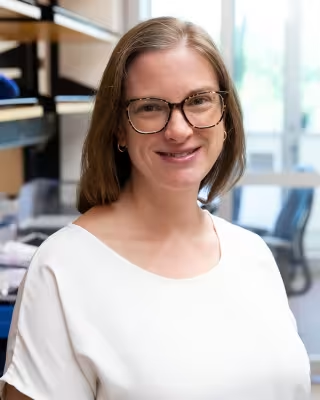
What drew you to science and to your field of research?
I was incredibly lucky to be exposed to basic principles of genetics in the fourth grade, through an extracurricular program led by Dr. Martin Petkovich, a professor at Queen’s University. I remember thinking that it was so cool that these things called genes influenced who we are, and I wanted to know more about them and how they communicated with the cells in our bodies.
What excites you most about science now?
One of the things that excites me most about science now is the pace and power of technological innovation that allows us to answer questions that have existed for ages, but in new and exciting ways, whether it's at the level of gene expression or being able to visualize and watch cell behaviour within a living organism.
What would you say to a girl who’s thinking about becoming a scientist?
To the girls who are thinking about becoming scientists, I'd say, it's a great time to be a scientist; all scientific disciplines benefit from the breadth of experience that comes from the diversity of people in it.
Related news and stories
View all News and Stories


