




Scientists receive >$3M funding boost to identify genetic drivers of brain cancers – and find ways to stop them
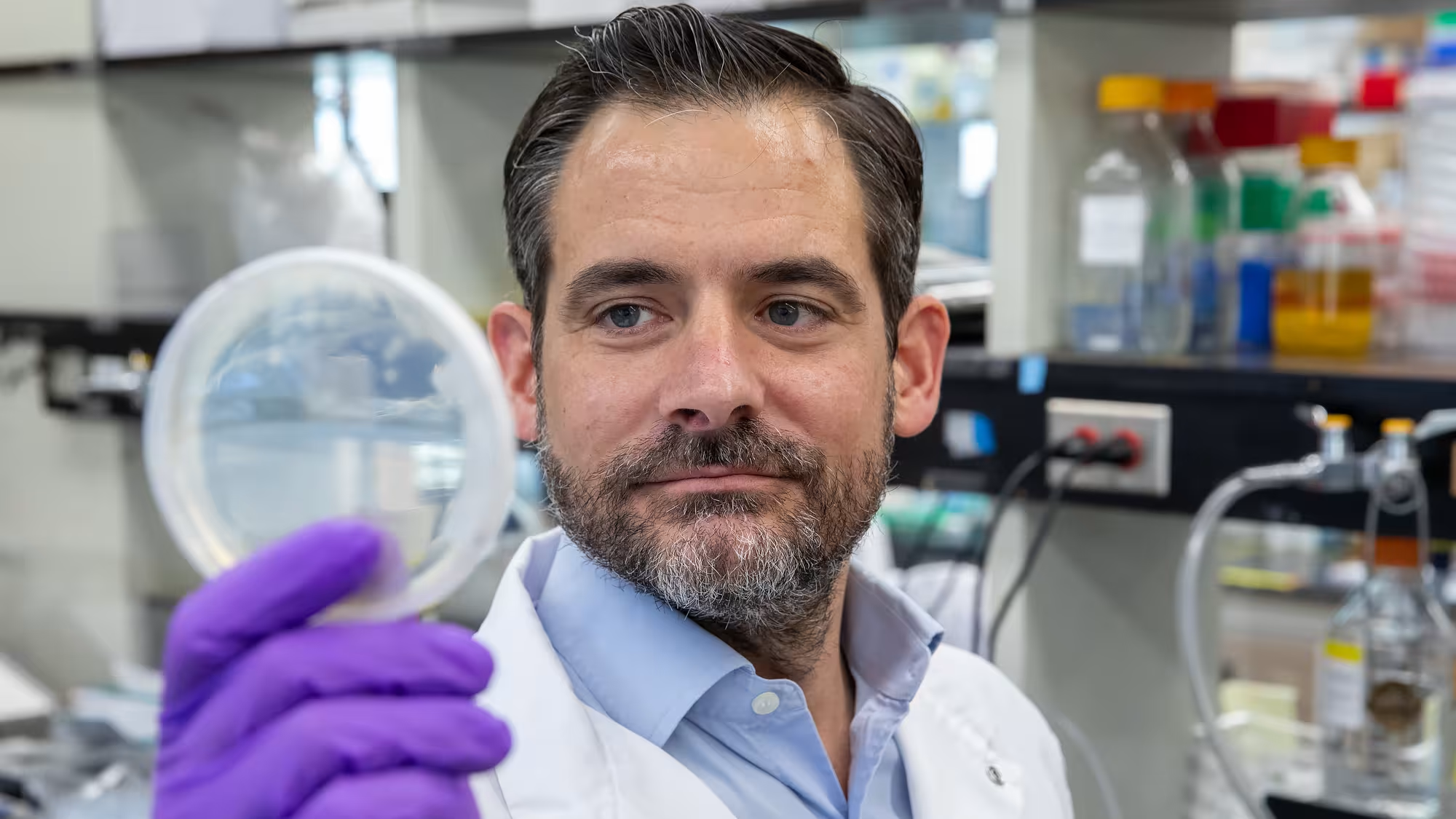
Dr. Daniel Schramek, Deputy Director of Discovery Research at Sinai Health and Senior Investigator at the Lunenfeld-Tanenbaum Research Institute, is on an international team that has been awarded more than $3 million (USD) to uncover the genetic changes that drive the growth of glioblastoma, the most common and aggressive brain cancer in adults.
Glioblastoma remains notoriously treatment-resistant and carries a devastating prognosis. Large genetic variability within and between patient tumours, poor drug penetration into the brain and surgical limitations related to preserving essential brain function have all contributed to decades of stalled progress. Recent technological breakthroughs, however, are opening new avenues to study and ultimately target the disease.
Funded by the Mark Foundation for Cancer Research, the Sontag Foundation and other philanthropic initiatives, the project takes a multi-pronged approach to examine the impact of large-scale genomic changes, specifically gains and losses of chromosome segments that affect hundreds of genes. Unlike individual gene mutations, which may appear in only a small fraction of tumour cells, these chromosomal changes are consistently observed across all patient tumours. Their universality makes them a promising therapeutic target, but their biological consequences have remained unknown due to the lack of appropriate experimental tools.
Dr. Schramek, who is the Canada Research Chair in Functional Cancer Genomics, has developed an approach that, for the first time, enables functional investigation of these large genomic alterations directly in the brain. This breakthrough will help the team identify the molecular drivers that could be exploited to develop urgently needed therapies for this highly aggressive cancer.
In addition to the major grant, Dr. Schramek has received $250,000 (USD) for a project focused on low-grade glioma, a slow-growing brain tumour that inevitably progresses to high-grade glioma, which carries a very poor prognosis. Building on his earlier discoveries, he will explore strategies to target tumour metabolism as a potential treatment.
Dr. Schramek, also a professor of molecular genetics at the University of Toronto said, “Glioblastoma and low-grade glioma are different diseases, but they are related. Low-grade glioma usually appears in younger people and progresses slowly, but it frequently evolves into deadly high-grade disease, clinically indistinguishable from glioblastoma. We now have tools that allow us to pinpoint the genes driving these cancers in ways that were not previously possible. This gives us real hope that we might be able to interfere with tumour evolution and halt disease progression, especially for glioblastoma, where treatment options have barely changed in decades.”
Related news and stories
View all News and Stories


