



Cloaked transplants evade immune rejection in a step towards off-the-shelf cells for therapy
Scientists have achieved a significant milestone in cell therapy research by demonstrating a long-term engraftment of genetically modified cells that successfully evade rejection by the recipient’s immune system. These cells bring us closer to universal, off-the-shelf therapies for all patients.
The breakthrough builds on decades of pioneering stem cell research by Dr. Andras Nagy, a senior investigator at the Lunenfeld-Tanenbaum Research Institute (LTRI), whose lab has long pursued safe, universally compatible cell therapies.
Stem cells are among medicine’s most exciting and promising tools, capable of self-renewing for unlimited expansion and then becoming virtually any cell type in the body. Yet two critical obstacles have hampered their clinical translation. One is the risk of cancerous transformation and the other is the rejection by the patient’s immune system when cells are sourced from an unidentical donor.
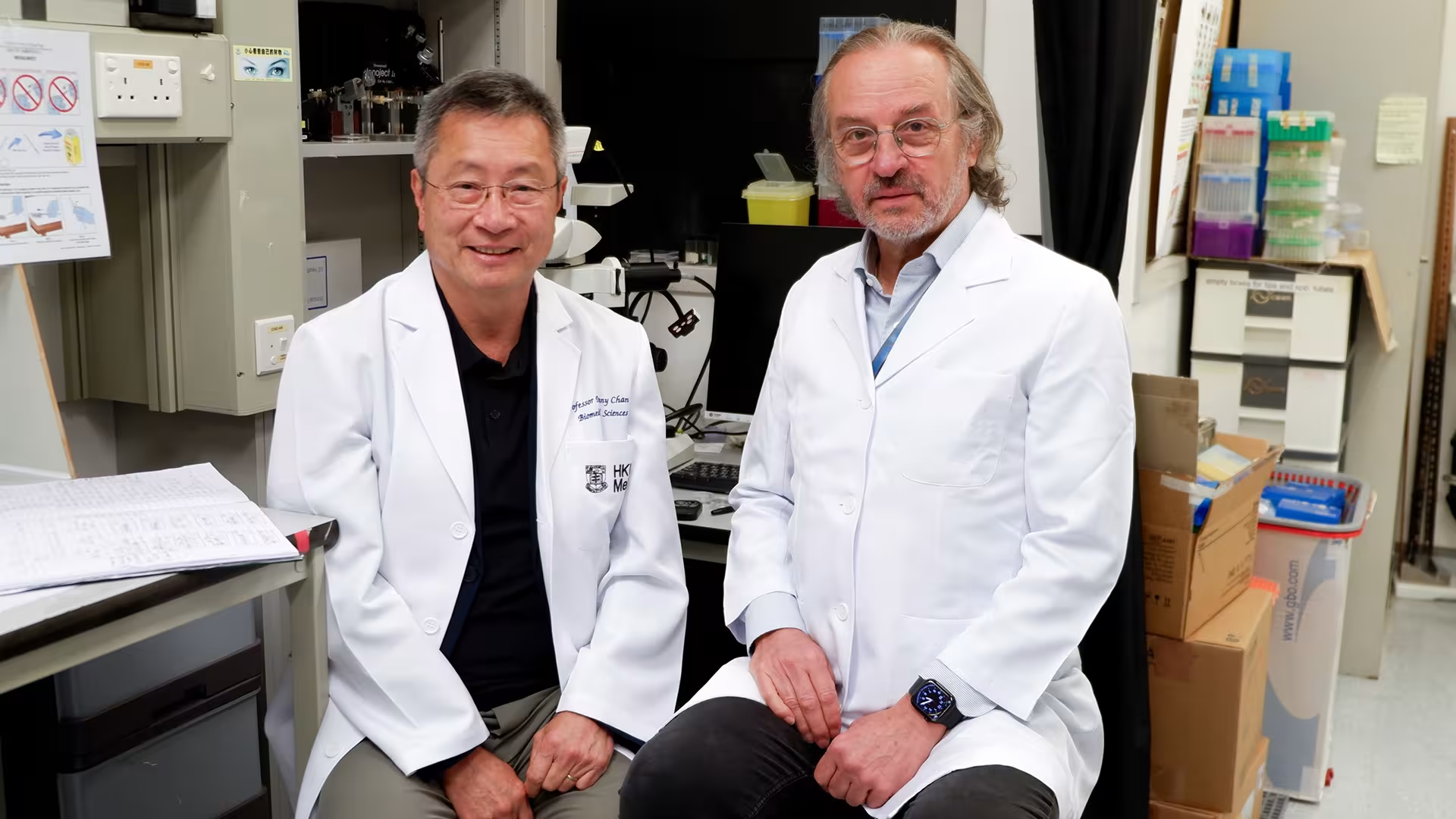
Dr. Nagy’s team had previously engineered stem cells that are both safe and effectively “invisible” to the immune system when transplanted into mice. Now, in collaboration with Dr. Danny Chan, Emeritus Professor of Cell Biology at the University of Hong Kong, their teams have demonstrated that human stem cells, and the specialized cells derived from them, can evade immune rejection in mice carrying a mismatched human immune system. Moreover, engraftment was achieved in the skin which is among immunologically most active implantation sites. The findings, published in Stem Cell Reports, provide proof-of-principle that universal donor cells therapy could one day be broadly available.
Related news and stories
View all News and Stories


