



Scientists untangle “chromosome chaos” and uncover 81 hidden genes driving the hardest-to-treat breast cancer
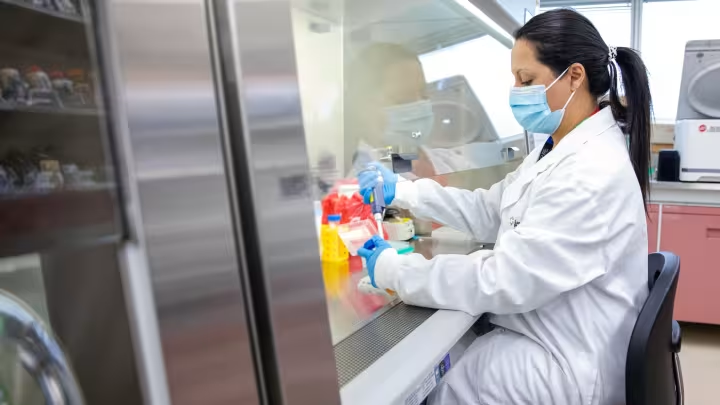
Researchers have solved a long-standing mystery of how abnormal chromosomes drive cancer, identifying 81 new genes involved in aggressive breast cancer. The discovery expands our understanding of the cellular processes behind the disease and opens new avenues for treatment.
A Sinai Health team focused on basal-like breast cancer (BLBC) developed a new gene-editing tool that allowed them, for the first time, to map the genetic drivers of this most aggressive and hardest-to-treat form of the disease.
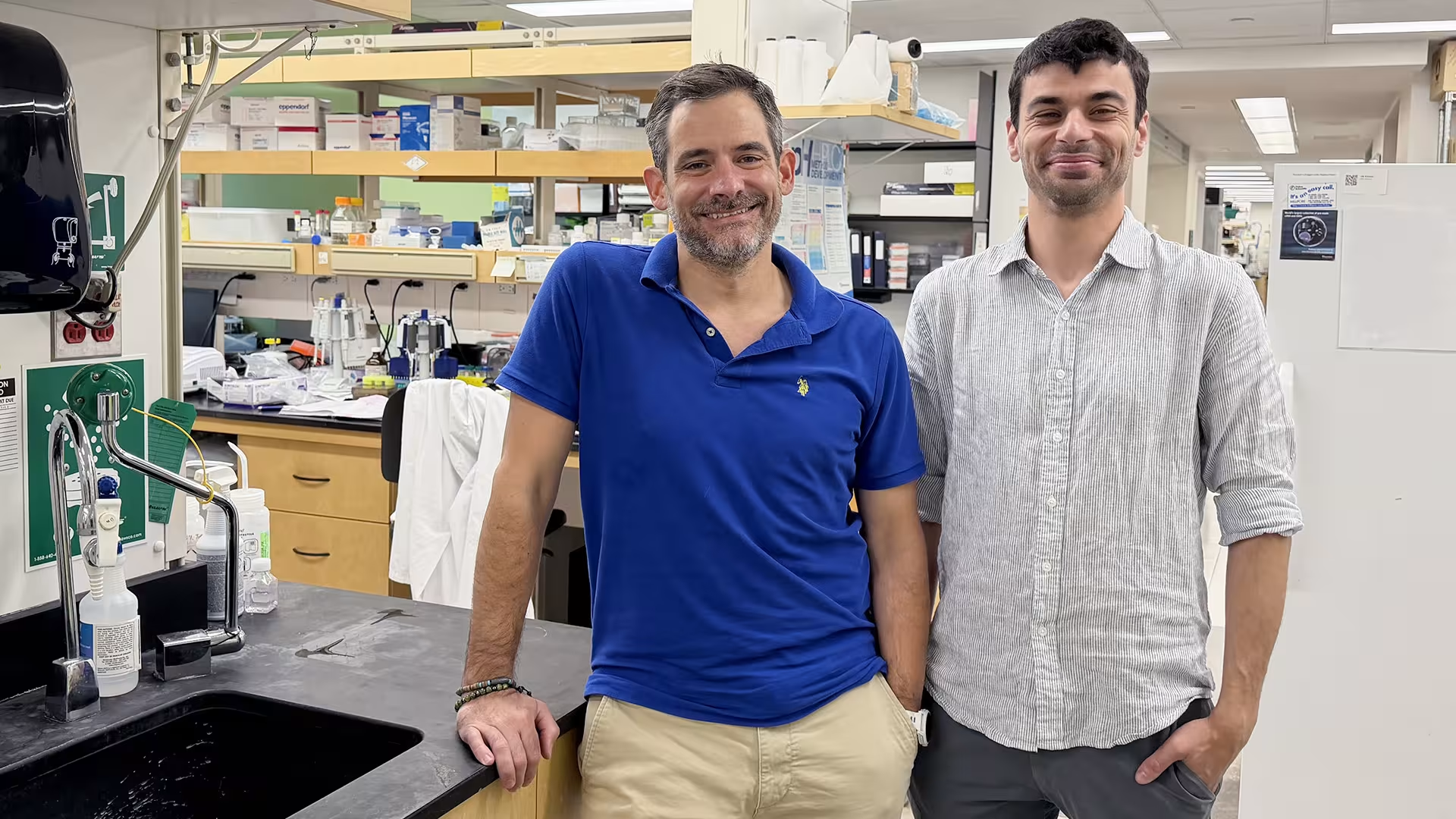
Published in Nature, the study was led by Dr. Daniel Schramek, Deputy Director of Discovery Research at Sinai Health and Senior Investigator at the Lunenfeld-Tanenbaum Research Institute (LTRI), along with Dr. Khalid Al-Zahrani, formerly a postdoctoral fellow at LTRI and now a faculty member at the Donnelly Centre for Cellular and Biomolecular Research at the University of Toronto (U of T).
Chromosome chaos in cancer
BLBC disproportionately affects younger women of colour and is marked by chromosomal rearrangements, where large regions of chromosomes are lost from cells or duplicated many times over. This is known as aneuploidy, a hallmark of several aggressive cancers. While this kind of chromosomal chaos is devastating for healthy cells, it supercharges the growth of cancer cells and fuels their spread in the body.
Because each affected chromosomal region carries hundreds of genes, there is no way of knowing which genes actually mattered for the disease, stalling progress toward new treatments. BLBC is also known as “triple-negative” breast cancer, a name that reflects a defining feature of the disease. Its tumours lack the three types of receptors that clinicians rely on to target and treat other forms of breast cancer, leaving patients with very few precision therapy options.
“In many types of breast cancer that have been extensively researched, the five-year survival rate is around 95 percent. Most people survive because we were able to find the genes that drive the cancer,” says Dr. Schramek, who holds the Canada Research Chair in Functional Cancer Genomics. “In this one subset, we don’t know what the driver of the cancer is and therefore, it has some of the worst outcomes for patients.”
A novel approach to mapping the genetic landscape
To map the full genetic landscape of BLBC, the team built on years of prior work adapting CRISPR genome editing for use in the mouse mammary gland, a well-established model to study breast cancer. This system allows thousands of genes to be functionally tested, simultaneously, within a single animal. While powerful, the platform had a key limitation: it could silence genes, but it couldn’t switch them on.
To overcome this, Dr. Al-Zahrani developed CRISPR-KOALA (Knockout and Activation Linked Assay) during his postdoctoral training with Dr. Schramek and Dr. Jeff Wrana, also a senior investigator at LTRI. Within a single mouse, the tool can silence genes and activate others, letting researchers systematically test what happens when individual genes are missing or multiplied as a result of chromosomal rearrangements.
Using this tool, the team screened more than 3,700 genes residing on the chromosomes commonly altered in BLBC and identified 81 previously unrecognized cancer-driving genes. Strikingly, 90 per cent of these genes went entirely undetected in standard cell culture experiments.
"The reason we hadn't found many of these driving genes before is that we were working in cell culture models," says Dr. Schramek who is also a professor in the Department of Molecular Genetics at U of T. "Now that we can study this cancer directly in a living system, we can observe the biological intricacies that only emerge in the context of a real tumour environment."
Towards targeted therapy
Among the cancer-driving genes the team identified, PLGRKT stood out as a particularly potent driver of BLBC. It helps cancer cells to survive deep inside a tumour, where oxygen is scarce, by switching to a different metabolic process to generate energy without it. That resilience, the researchers found, actively promotes tumour growth, making the PLGRKT gene a compelling candidate for targeted therapy.
“This work brought together computational analysis, biotechnology development and functional genomics experiments across a range of mouse and human breast cancer models,” says Dr. Al-Zahrani, also an assistant professor in U of T’s Department of Molecular Genetics. “Combining all of that enabled us to uncover roles for many genes that we did not know were driving breast cancer and to start thinking about how to tackle BLBC in a targeted way.”
This study was supported by funding from the Terry Fox Research Institute and the Canadian Cancer Society Research Institute.
Related news and stories
View all News and Stories


