


Opening doors to health care: Inside Sinai Health's partnership with Toronto Community Housing
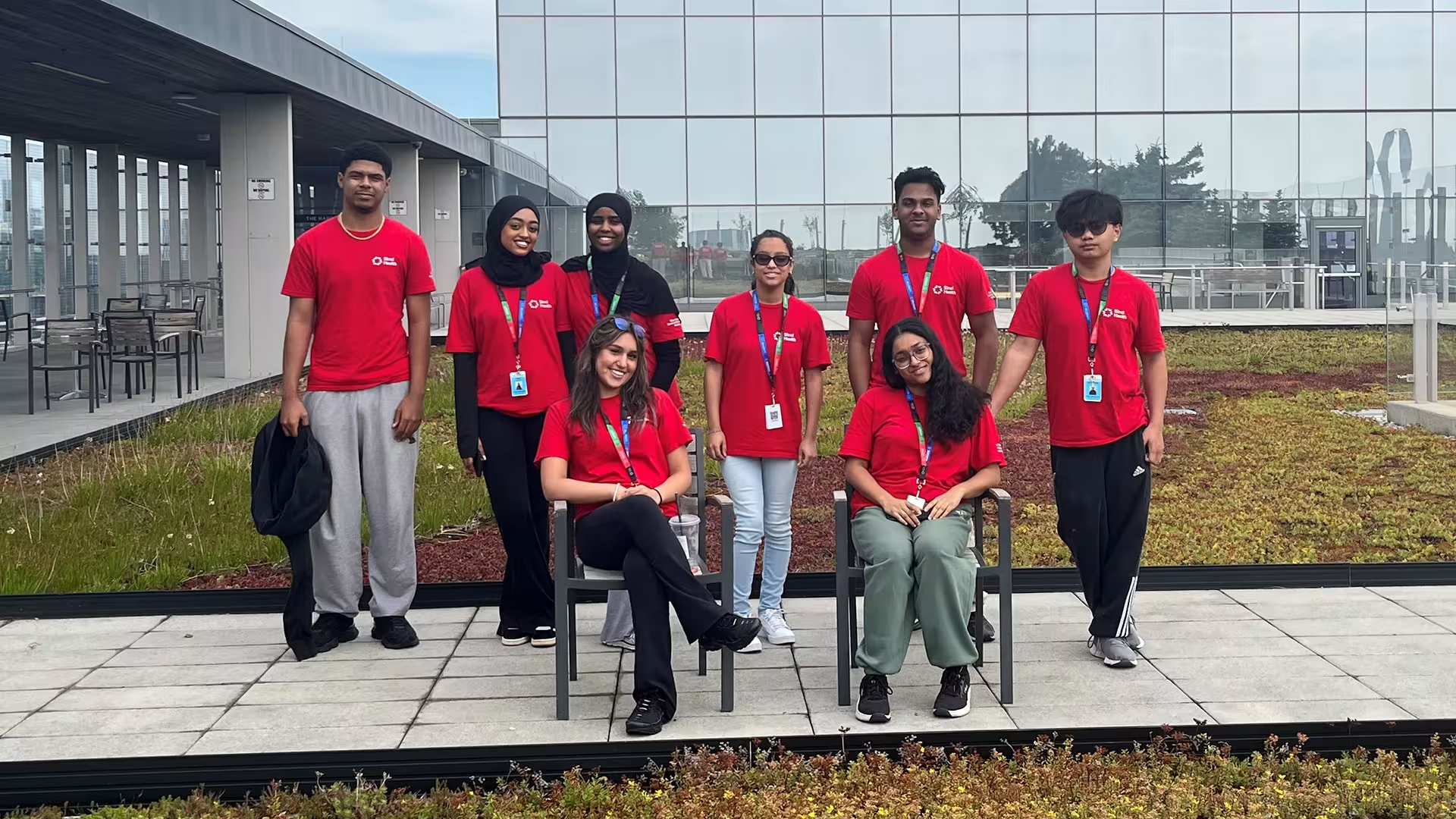
Even in the early days of spring, summer is rarely far from most Canadians’ minds. Most high school students spend theirs flipping burgers, mowing lawns, hitting the beach or planning for university. But a select few pull on a colourful T-shirt and take their first steps into health care with Sinai Health.
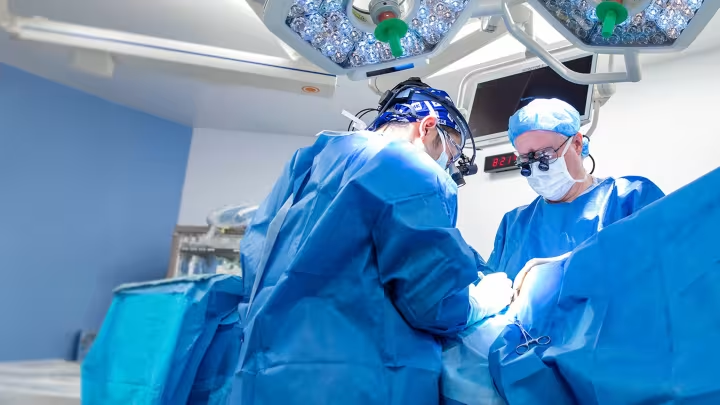
Through a partnership with the Toronto Community Housing Corporation (TCHC), 11 young people spent July and August 2025 working at Mount Sinai Hospital and Hennick Bridgepoint Hospital. They served in such areas as the Neonatal Intensive Care Unit (NICU), Fracture Clinic, MAUVE (Maximizing Aging Using Volunteer Engagement) program and the Medical Device Reprocessing Department (MDRD).
Building bridges through mentorship
The summer program grew out of a long-standing relationship between Sinai Health and TCHC, built on mentorship, scholarship support and a shared goal to open health-care pathways for young people.
“Partnerships like this one open doors early for young people to see themselves as future health-care leaders,” says Dr. Gary Newton, President and CEO of Sinai Health. “That benefits all of us — the students, our teams and the patients we serve.”
Sinai Health teams create shadowing opportunities, from observing births and nerve blocks to participating in fire evacuation drills with Toronto Fire Services. Students also meet with leadership for Q-and-A sessions about career paths, medical school and the many professions beyond medicine and nursing that make a hospital run.
“Programs like this give our learners early access to hands-on health-care experiences — an opportunity to see themselves in spaces that for many may feel unattainable,” says Stacy Golding, a Community Service Coordinator with TCHC. “We're talking about low-income, racialized individuals. They aspire to be in this space, but oftentimes they think they can't be. Access is everything because we know that when given opportunities, our learners can thrive.”
Real work, real impact
The summer volunteer program is structured just like Sinai Health’s year-round co-op placements, but is reserved for youth living in TCHC, says Theresa Shiel, Director of Volunteer Resources.
“We wanted to give these students a real chance to get their foot in the door at a well-known hospital,” Theresa says.
Students complete an application, sit for a 30-minute interview and commit to working Monday to Friday, four to six hours a day. Once accepted, they are then placed in areas that match their interests and the needs of the hospital.
The students are integral members of care teams, not “extras.” MDRD volunteers help pick, prepare and pack instruments for elective surgeries. In other areas, they assist with wayfinding, walk patients to tests, provide warm blankets and offer companionship. These small but essential jobs can mean a great deal for patients, caregivers and care teams.
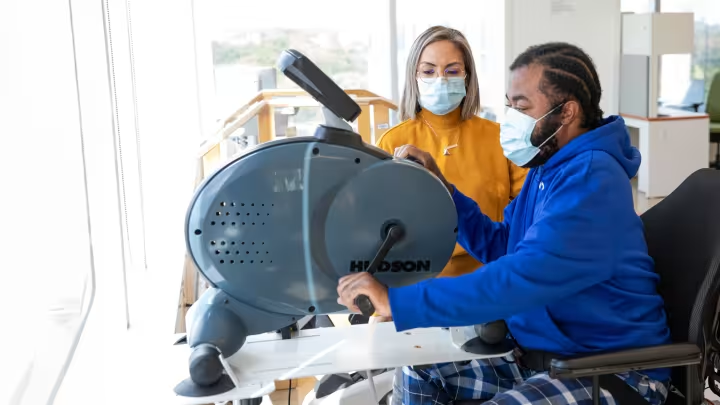
“What the volunteers really get out of it is patient interaction, the front-line experience,” says Angel Lau, a MAUVE program elder life specialist. “If they’re really interested in doing frontline work — occupational therapy, physical therapy, nursing, things like that — it really gives them a good taste of what to expect.”
Discovering more than medicine
While students arrive hoping to explore health-care careers, many discover they are also learning about themselves. While in the program, they practise teamwork, leadership and problem-solving in real time. These skills are invaluable, especially when responding to an emergency code on the unit or supporting older adults living with dementia.
“These students don't just learn about health care,” Theresa says. “They learn about who they are, how they handle sadness, loneliness, codes and situations they will never see in a classroom.”
Some students return as regular volunteers, researchers or staff. Others realize bedside care is not for them. Theresa considers that a success too.
“We once had a co-op student who wanted to be a physician, but fainted at the sight of blood,” she remembers. “He’s now a top-notch lawyer who works with hospitals. It’s an opportunity for students to learn that working in health care doesn’t always mean working as a physician.”
For Theresa, discovery requires a two-way commitment. “It's not an assignment,” she says. “It's a partnership between Sinai Health and the student about how much they want to commit and learn. If they're willing to give, we want to give back.”
Related news and stories
View all News and Stories


