





Sinai Health’s Advanced IBD Fellowship is cultivating future leaders IBD care, in Canada and beyond
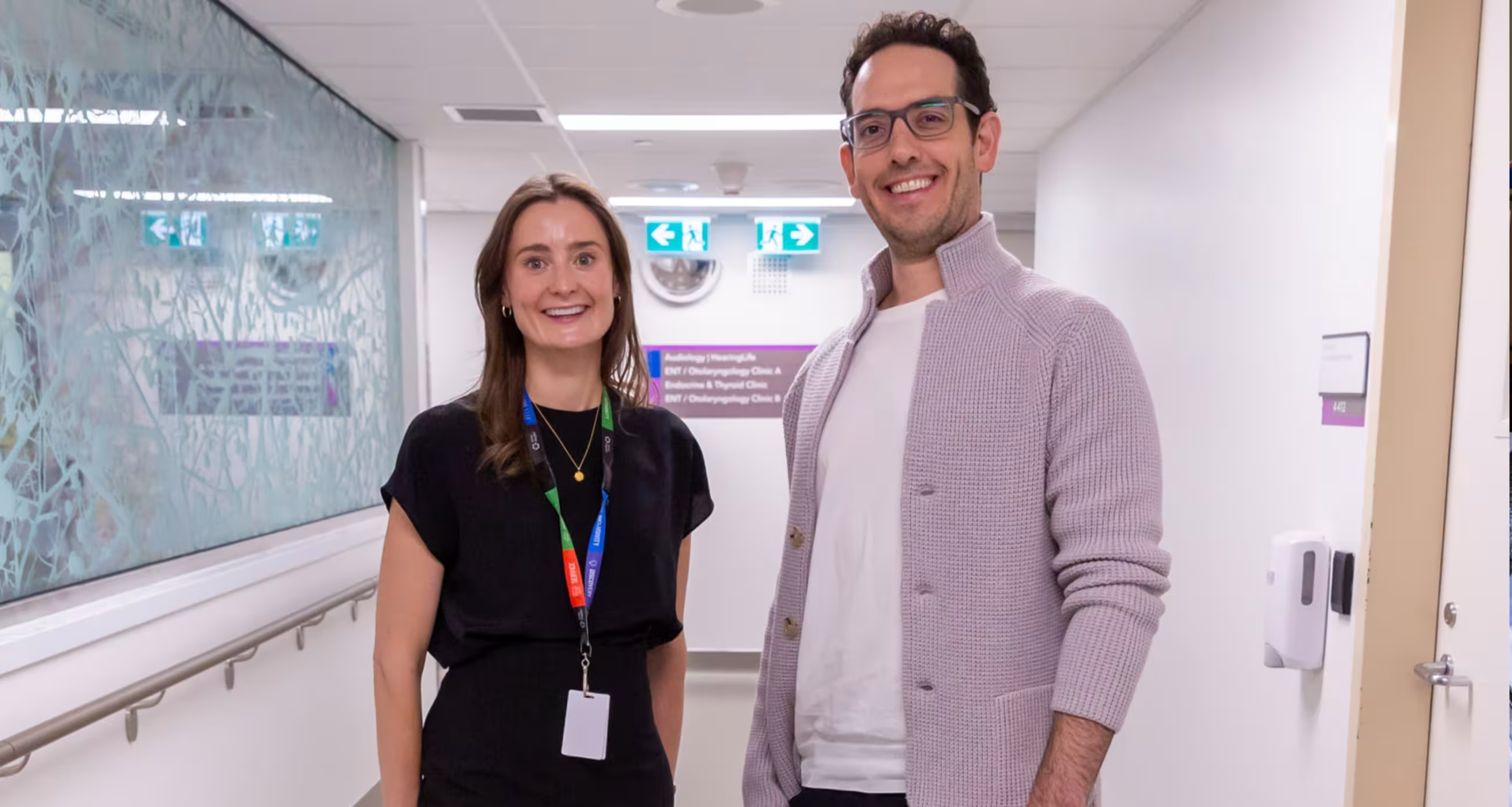
Sinai Health’s Advanced Fellowship in Inflammatory Bowel Disease (IBD) draws fellows from around the world with a shared goal: advancing the quality of IBD care.
For early-career gastroenterologists, choosing the right fellowship can shape the path ahead. For Dr. Cathy McShane, a second-year fellow trained in Ireland, the decision to join the Advanced Fellowship in IBD at Mount Sinai Hospital was clear. Mount Sinai delivers care to around 10,000 IBD patients annually and its fellowship is the largest program of its kind in the world, offering exceptional clinical and research experience. Dr. McShane saw the program as a unique chance to gain hands-on experience managing complex IBD cases, and contribute to cutting-edge research.
Her work currently focuses on how diet may trigger Crohn’s disease and assessing the real-world effectiveness of new IBD treatments – work that bridges both scientific discovery with tangible impact for patients.
“This experience has sharpened my clinical judgment and broadened my perspective on what high-quality, patient-centred IBD care looks like,” Dr. McShane said. “Learning from experts in the field has provided me with an enriched perspective on how evidence, collaboration, and clinical experience come together to improve outcomes for people living with IBD.”
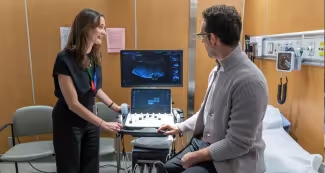
Drs. Cathy McShane and Zane Gallinger with the intestinal bowel ultrasound, a state-of-the art diagnostic tool to help with managing the course of IBD.
Impact that extends beyond our walls
Based at the Zane Cohen Centre, a clinical research facility at Mount Sinai, the Fellowship is shaping IBD training, research and collaboration internationally.
“We’re cultivating the next generation of IBD specialists in Canada while attracting top-tier trainees,” said Dr. Zane Gallinger, the Fellowship’s Director. “Our fellows go on to lead IBD programs across Canada and internationally. Through shared research projects and ongoing trainee networks, the program is setting the global standard for IBD care anchored in evidence-based medicine, multidisciplinary teamwork, and academic leadership.”
Current projects focus on improving the timeliness of IBD diagnosis and identifying factors that drive disease progression. Fellows are also actively involved in developing the use of the intestinal bowel ultrasound, a state-of-the art diagnostic tool to help with managing the course of IBD.
Dr. Gallinger reflects that this continued success underscores the program’s strength in both mentorship and collaboration.
“We’re proud to see our graduates step into leadership roles nationally and internationally,” he said. “In addition, we’ve strengthened partnerships with our allied health colleagues, allowing fellows to gain even greater exposure to multidisciplinary IBD care, from nutrition and mental health to advanced therapeutics.”
As the Fellowship continues to evolve, its impact will extend across both clinical practice and research, continuing to improve care for patients with IBD. In fostering the next generation of leaders in this area, the program is helping build a more connected, multidisciplinary approach to care – driving innovation, collaboration and better outcomes for patients living with IBD, in Canada and around the world.
Related news and stories
View all News and Stories


