


Talking openly about women’s health: Q and A with Dr. Amanda Selk
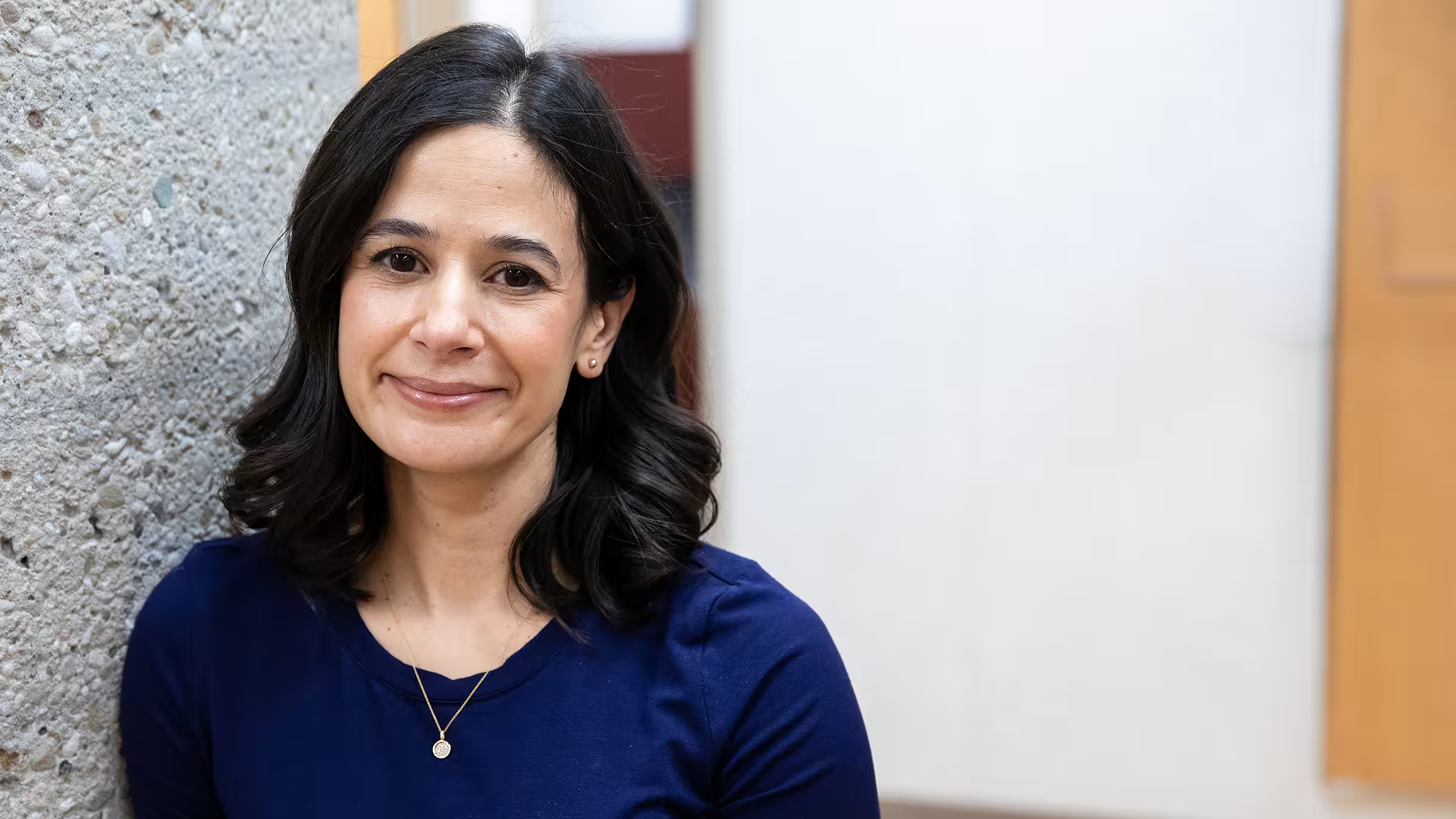
Dr. Amanda Selk, an obstetrician-gynaecologist (OB-GYN) and vulvar dermatology specialist at Sinai Health, is a passionate advocate for women’s health. Through her clinical work and social media presence, she’s helping to normalize conversations about gynaecologic care, break down stigma and provide reliable, evidence-based information where patients are already looking for it – online.
In our conversation with Dr. Selk, she shares what drew her to this specialty, why education and openness are essential for women’s health and how platforms can help close care gaps and correct misinformation.
What led you to focus your career in obstetrics and gynaecology, and more specifically, vulvar dermatology?
I originally entered OB-GYN because delivering babies is such a meaningful part of people’s lives and it’s a privilege to support families during that experience. I ultimately found my way into vulvar dermatology almost by accident during my last rotation in training. I realized how many patients had struggled for years without a diagnosis and how few clinicians had formal training in this area.
It became clear that this was a gap in care – people didn’t know where to go, many felt embarrassed to ask for help, and clinicians themselves often lacked confidence or expertise. Once I recognized that, I knew this was where I could make a real difference.
You’ve built a strong social media presence sharing educational information on women’s health. What inspired you to start your Instagram page and how do you choose what to post?
I started my Instagram earlier this year because so many patients are getting their information online and a lot of it isn’t accurate. If misinformation bothers you, I think it’s on us as clinicians to share better information. Social media allows me to reach far more people than I ever could in clinic.
I choose topics based on what feels timely – common questions I hear from patients, issues trending online, or areas where I see confusion. I also have to navigate platform constraints, since posts containing gynaecologic terms aren’t always promoted. Finding creative ways to share evidence-based, approachable content while still encouraging people to learn the real names for their anatomy is part of the challenge.
Why do you think it’s so important to normalize conversations about vulvar and gynaecologic health?
There is still so much shame and embarrassment surrounding these topics. People delay seeking care because they’re uncomfortable talking about symptoms, or they hope symptoms will resolve on their own.
That hesitation can have serious consequences – it affects quality of life, and in some cases, timely diagnosis of conditions like vulvar cancer.
These cancers are often detected late because patients are embarrassed and clinicians may have limited training. We need to normalize these conversations, educate both patients and providers, and remind people that this is simply health – not something taboo.
What developments in women’s health or your own work are you most excited about right now?
I’m encouraged that this field is finally receiving more attention – in research, media coverage and patient awareness. Our vulvar health fellowship is one of the few of its kind in the world and it’s exciting to help train the next generation of experts.
There is also growing interest in developing new treatments specifically for vulvar conditions. For a long time, this area was overlooked, but we are finally seeing real momentum in research and innovation.
If you could leave people with one key takeaway about women’s health, what would it be?
Don’t ignore your symptoms or accept discomfort as “normal.” We have excellent treatments and resources, but we can only help if we know what’s going on. The more openly we talk about women’s health, the better care and understanding we’ll have – for everyone.
Related news and stories
View all News and Stories


